I once read a quote by T.E. Lawrence (Lawrence of Arabia) where he used “archaeologizing” as a verb. Lawrence studied archaeology at Jesus College in Oxford so it was not surprising to find his desert attire on display, when I visited Oxford’s Ashmolean Museum.
Lawrence adopted Arab dress as he fought with the Arab army during World War I.
The Ashmolean Museum of Art and Archaeology is one of the world’s oldest museums. It opened in 1683. It’s archaeological collection is fabulous. It was one of my first stops and last stops during my visit to Oxford.One of the first displays we saw was this ossuary (bone box for burials) and a scroll jar like those that held the Dead Sea Scrolls.There are lots of classical Greek and Roman statuary, some original, many copies.The race is on. Athenian pottery from the sixth century BC.The development of writing in Mesopotamia, early examples of cuneiform.The history of writing from Egypt. A scribe’s tools and a small model of a scribe at work.The mummy of lady Meresamun, from about the 8th century BC Egypt.A copy of the Mesha stele, also known as The Moabite Stone, in the news recently for new research indicating that the Biblical king David is referenced in its inscription.The Ashmolean has art from many countries and many periods. This is Italian, from the 16th century, depicting St. Bartholomew and St. Julian the Hospitaler.Another display dated to just a few decades before the Ashmolean’s opening.Here’s the explanation with the story of the Oxford Martyrs.A Memorial to the Oxford Martyrs is nearby, in fact you can see the Ashmolean in the background. The actual location of their death is marked nearby on Broad Street.
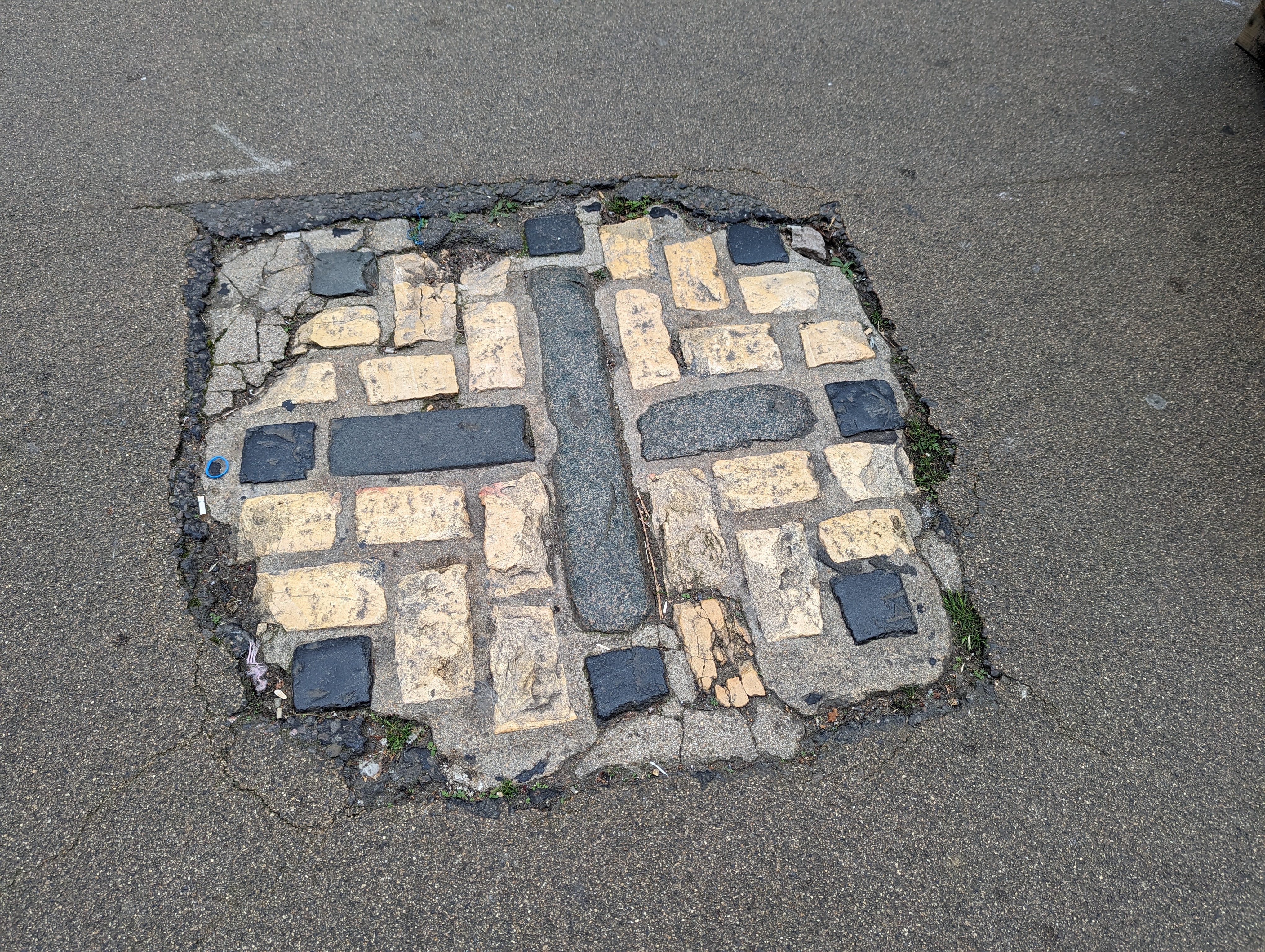
X marks the spot, on Broad Street
Just a bit further down Broad Street is the Weston Library, where a items marking the centennial of the discovery of the tomb of King Tutankhamun were on display.Howard Carter, the excavator of Tut’s Tomb, left his records of the excavation with the Griffith Institute at Oxford.
A fun place to do some archaeologizing on a winter day.




 RADIOSCRIBE
2 comments