From our new temporary home at Kibbutz Ginosar, our first daylong foray was east and then north, into the Golan Heights.
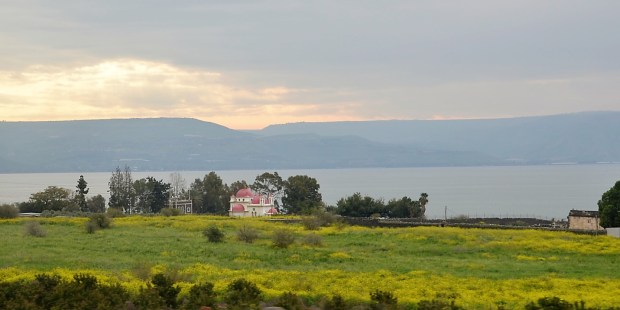
I am always cheered by seeing the colorful Orthodox church at Capernaum with its bright red roofs.
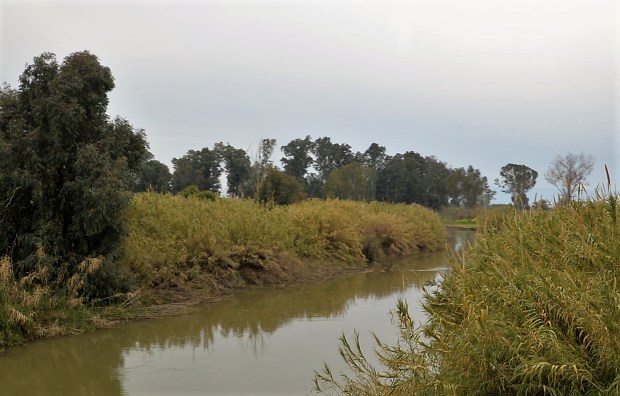
We crossed the Jordan River, just above its outlet into the Sea of Galilee.
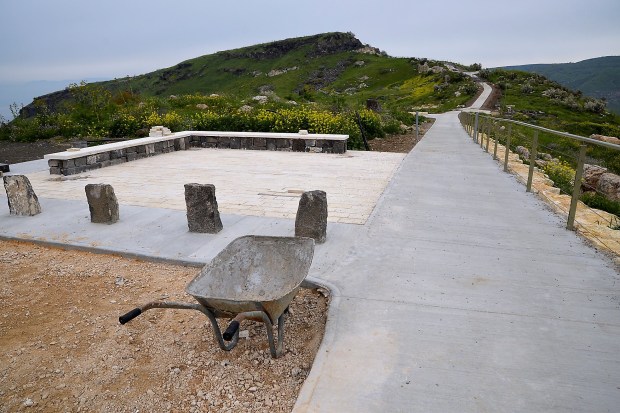
We arrived at Hippos/Sussita, this decapolis city, with rain threatening. The sidewalk to the site looks brand new.
Archaeologists from Haifa University have been working in the mortuary area on regular weekends recently.
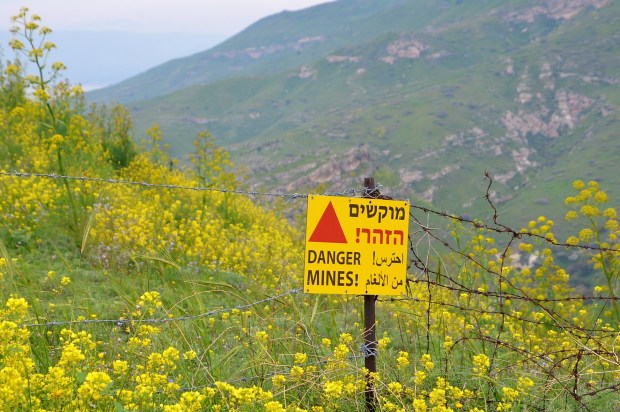
There are still dangerous areas around Sussita, and in other parts of the Golan Heights.
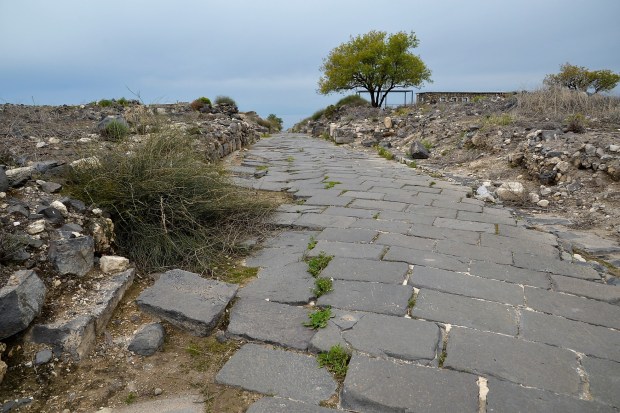
The main street into the city. With many areas still left to excavate.
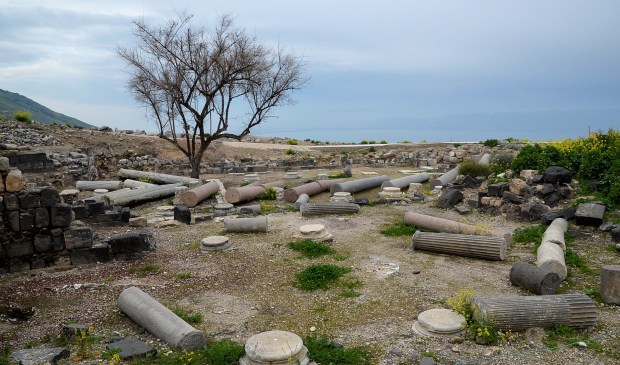
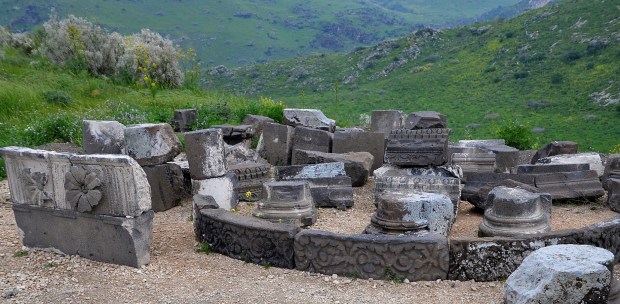
An 8th century earthquake destroyed the city and it was never rebuilt. Columns remain where they fell.
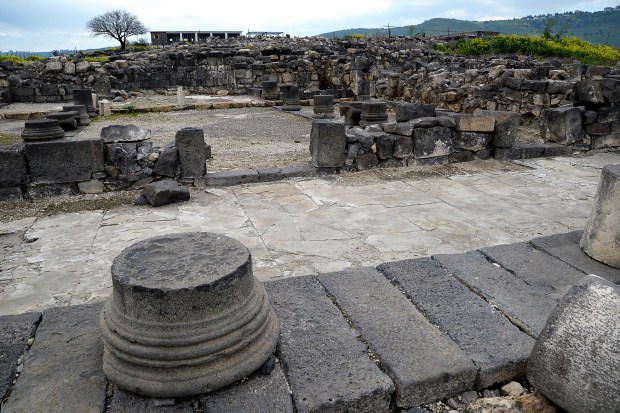
Over a half dozen churches have been excavated at Sussita.

We heard a great lesson from our co-leader John DeLancey about the New Testament cities of the decapolis.

More rain fell at Qatzrin, a talmudic village with an intact synagogue.
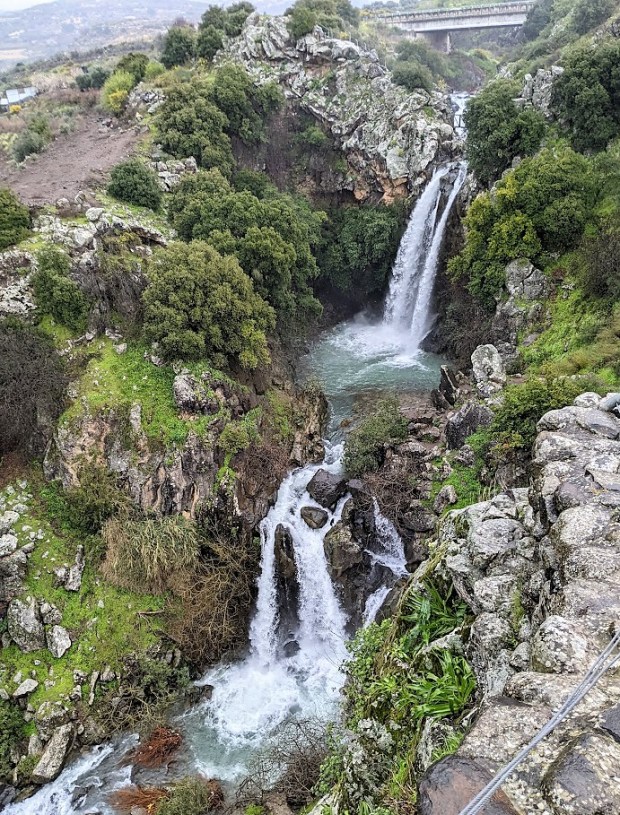
Saar Falls were bursting with water.
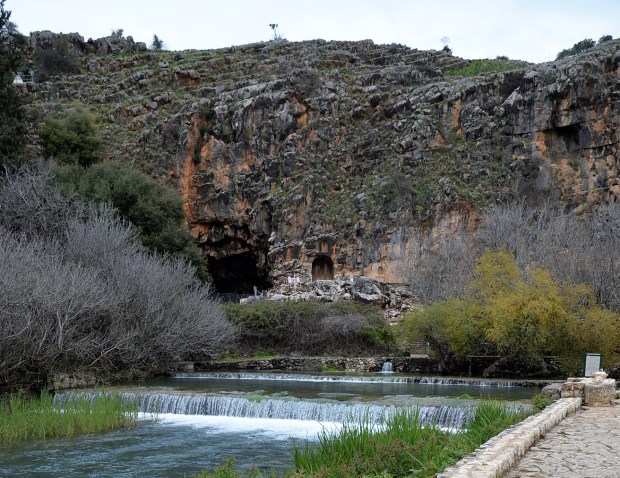
More water poured out of Mt. Hermon at Banias (Caesarea Philippi in the New Testament). The Banias River is one source of the Jordan River.
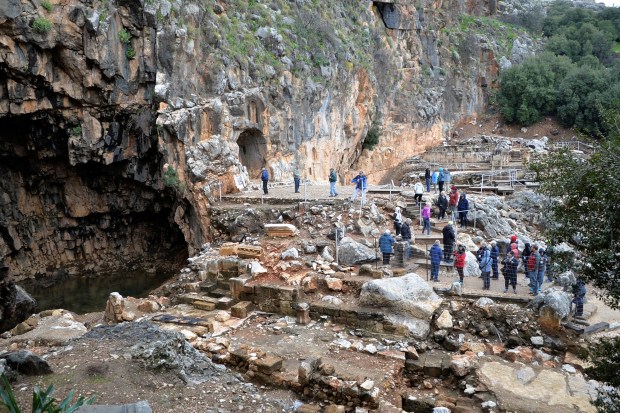
Remains of the Pan Cult temples at Banias. The water once streamed out of the cave.
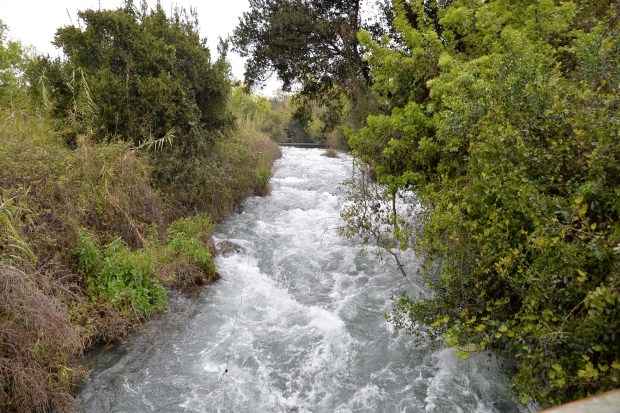
The Dan River, another source of the Jordan, at the Dan Nature Preserve.
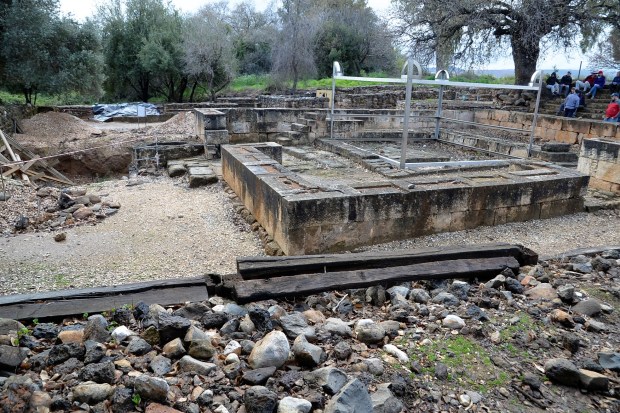
The high place at Dan, where King Rehoboam set up the golden calf.
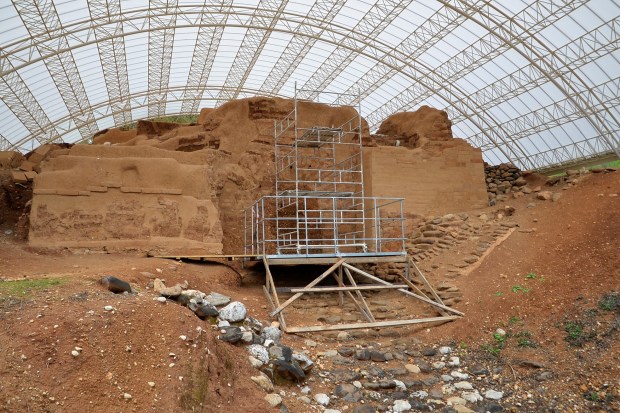
The Bronze Age Gate at Tel Dan, one of the oldest mud brick gates in the world, perhaps visited by the patriarch Abraham.

The Iron Age Gate at Tel Dan. At the near edge of the gate plaza, the House of David inscription was found in 1993, one of the most important archaeological discoveries of the latter 20th century.
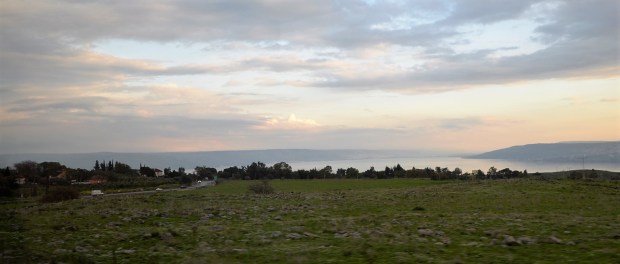
Sunset was nearing as we approached the Sea of Galilee at the end of the day.
 RADIOSCRIBE
One comment