Feeling the need to get out and get away on a fall Saturday, we were attracted to the Fall Family Fun Drive at Old World Wisconsin, a State of Wisconsin Historic Site. OWW is one of Wisconsin’s historic gems, historic homes and farms from the first generation European immigrants collected from around the state, then restored and preserved at this one location in southeastern Wisconsin. We’ve been there several times, one of my favorite memories is a base ball game we attended a decade or so ago, played according to 19th century rules and conventions (when they spelled it with two words).
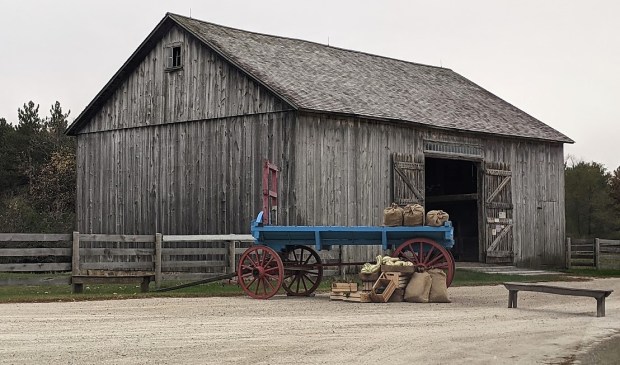
Usually when we’ve visited OWW we do a lot of walking, or at least catch the tram that travels between sites. But OWW’s Fall Family Fun Drive allowed us to drive the gravel road between the settlements and keep our distance from the other folks.
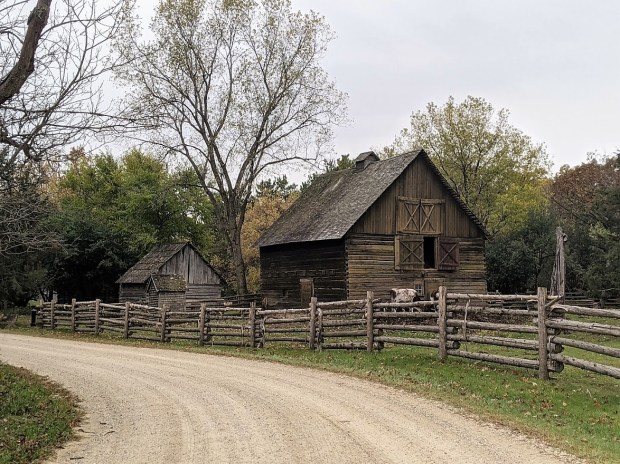
It felt just like driving Wisconsin’s scenic back roads a century and a half ago.
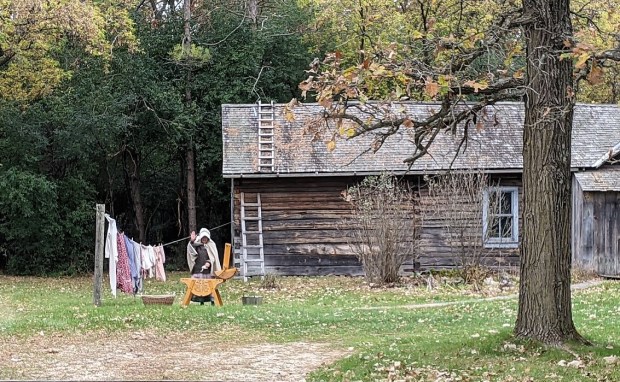
Some of the regular costumed interpreters were still on duty, like this lady at the 1910 Finnish Immigrant Farm. But we couldn’t stop and chat like we would otherwise normally be able to do.
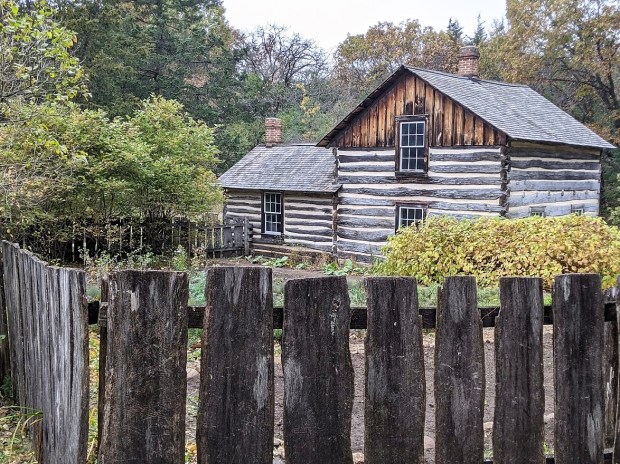
Next to the Finnish farm was the 1890s Danish Immigrant Farm.
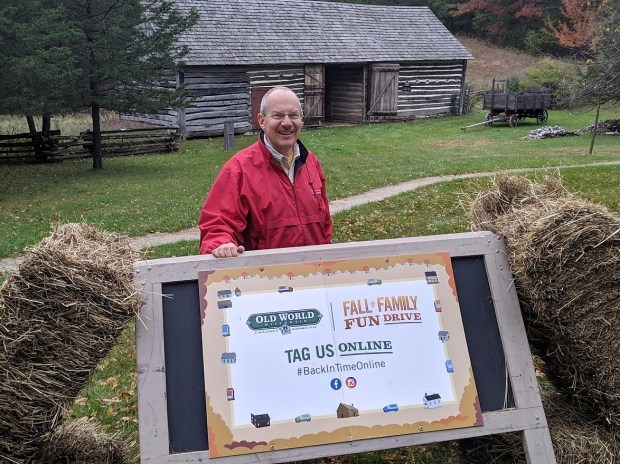
Social Media, as well as Social Distancing, was incorporated into the Fall Family Fun Drive planning. Staff was standing by here to facilitate the photo.

At the 1840s Norwegian Settler’s Cabin we enjoyed the serenade from the Norwegian hardingfele (hardanger fiddle) for a few minutes.

Then it was follow the car ahead of us on to the next stop.

Wisconsin attracted a lot of Scandinavian and German settlers, although in the 19th century the German settlers would have identified themselves as being from one of the 29 different regions that today make up Germany. This interpreter at the 1870s Hessian Farm is doing some hand work while keeping an eye on what’s going on in the smokehouse.
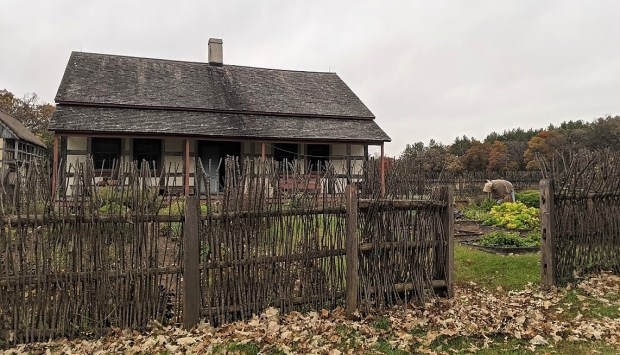
At the nearby 1860s Pomeranian Immigrant Farm there’s work to be done in the garden before the winter sets in.
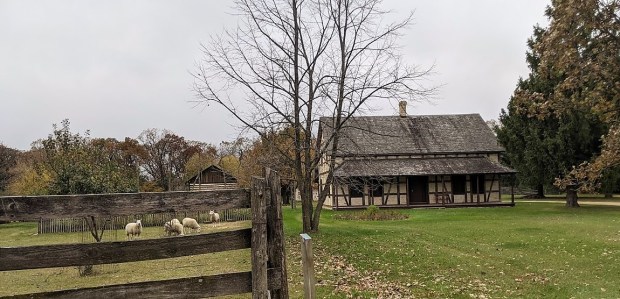
Sheep in the field next to the 1880s Pomeranian Immigrant Farmhouse.
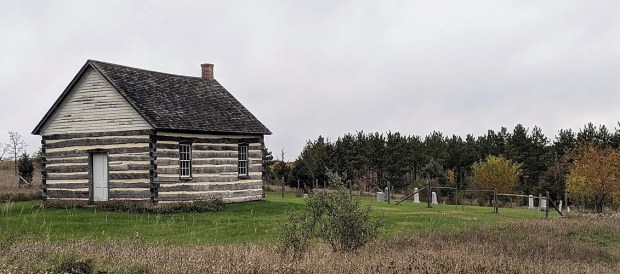
Not officially on the tour, but we passed by the 1910 Pleasant Ridge United Brethren Church and family cemetery, which reminded me of the still-standing rural Grant County church built by my immigrant ancestors 150 years ago.
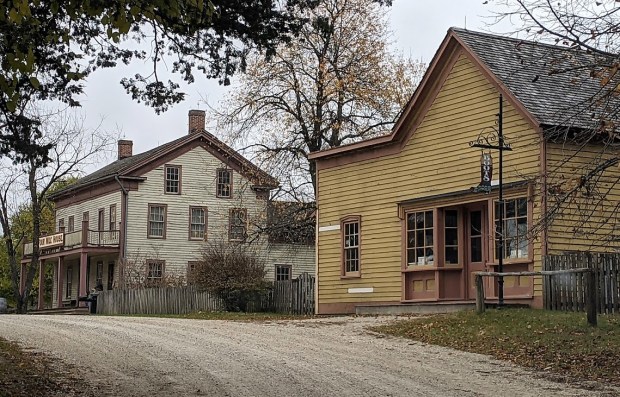
Near the end of the tour, we came to the Crossroads Village.
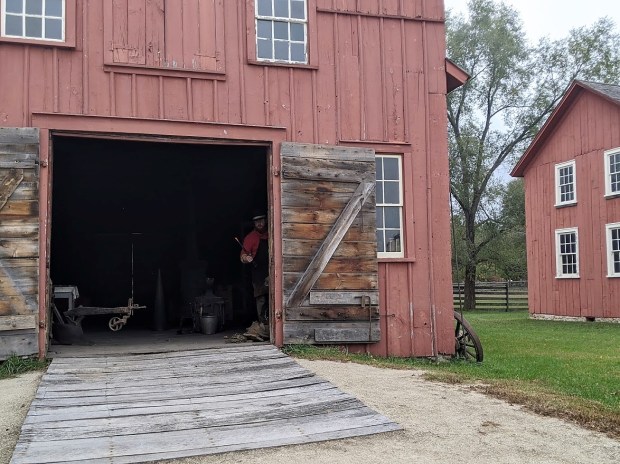
Here the village smithy stands, inside his blacksmith shop, sharing his work in progress.

St. Peter’s church, moved to OWW from the corner of Jackson and State Streets in Milwaukee. Built in 1839, it was the first Catholic Church built in Milwaukee, serving the community’s early Irish and German immigrants.
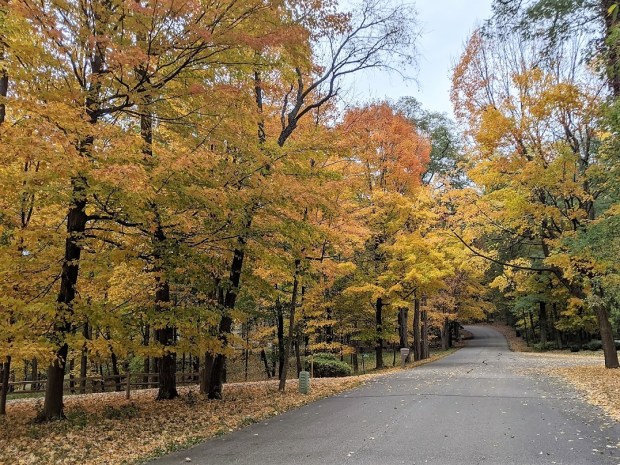
After we left OWW we did a little more site seeing, enjoying these beautiful fall colors as we emerged from the nearby Kettle Moraine State Forest.
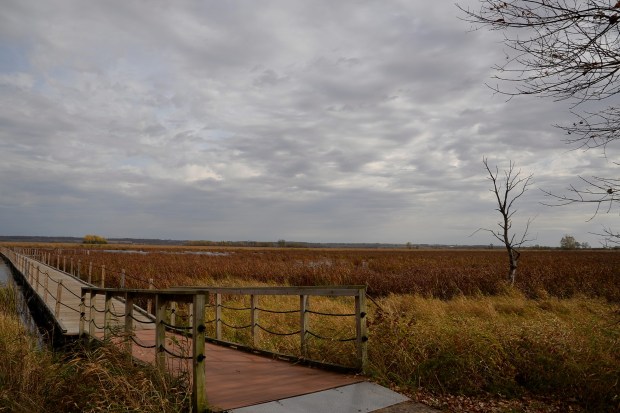
Our last stop of the day, later that afternoon, was the floating boardwalk at the Horicon Marsh National Wildlife Refuge.
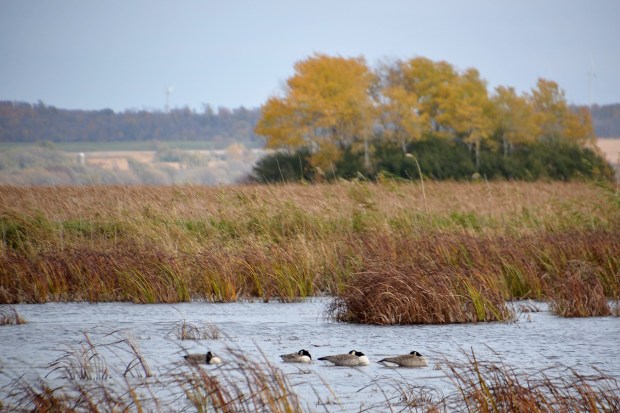
It was a blustery afternoon and the Canada Geese didn’t seem to be too happy about it.
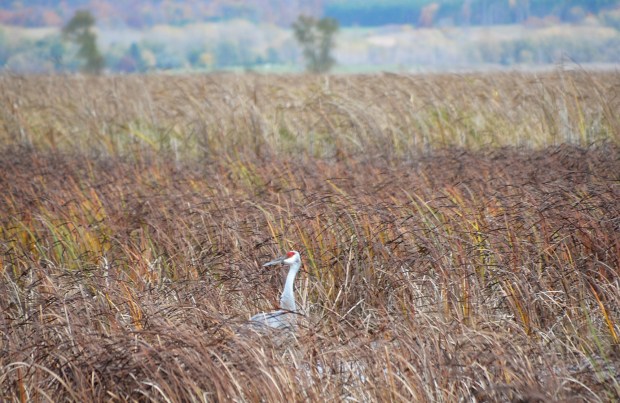
We saw one sandhill crane.
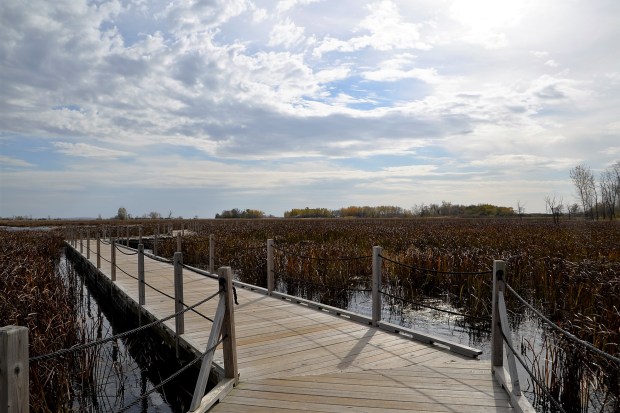
The weather could have been a little nicer, but it was a pretty day in its own way.
 RADIOSCRIBE