Ever since Sara and Ryan moved to Virginia in 2010 I have wanted to spend a week of vacation enjoying the history and natural beauty of their part of Virginia. Since then there’s been a number of visits but finally this June I was able to spend a whole week and start to get acquainted with Shenandoah.
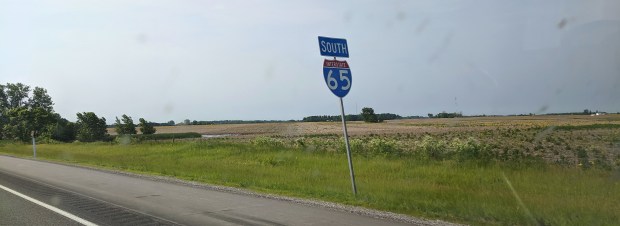
In my cross-country seven state sojourn on a Saturday in early June, I could only recall seeing two farmers out working in their fields. Listening to Orion Samuelson’s early morning farm show on WGN radio, I heard that farmers are facing a tough summer with rain, flooding, and a tariff-war drying up overseas markets. I did see a lot of standing water in many midwest farm fields. It’s going to be a tough year.

Finally I got to Virginia, where Audrey and Lana live.

Our first excursion day we headed toward the Shenandoah National Park with its stunning scenic views.
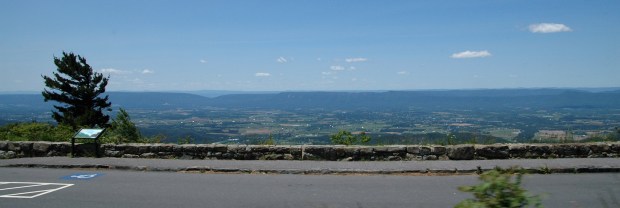
Like this, along Skyline Drive.
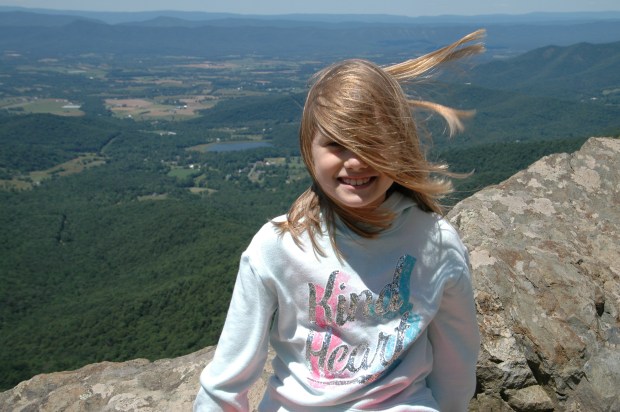
When we got out to climb a mountain, Lana discovered it was kind of windy.
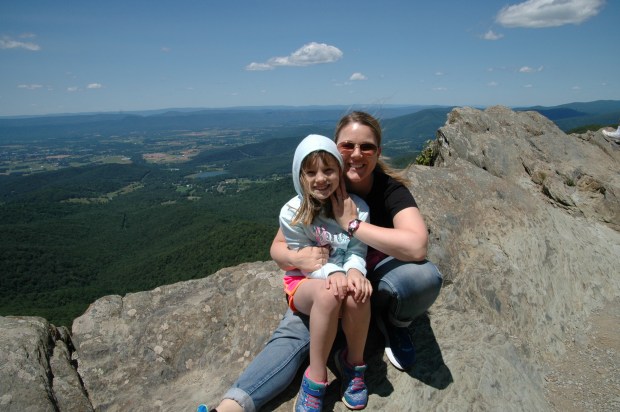
But we got some photos anyway.
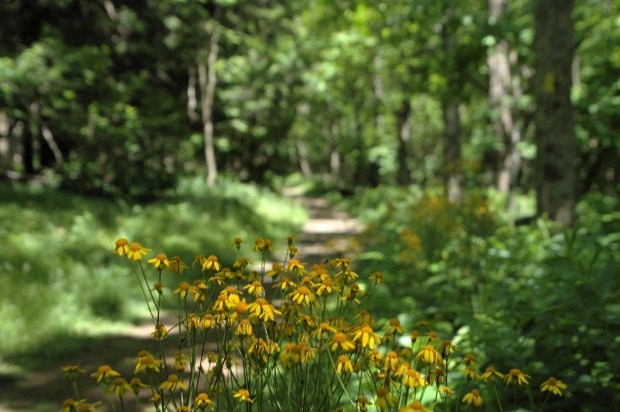
There were beautiful flowers along the trails.
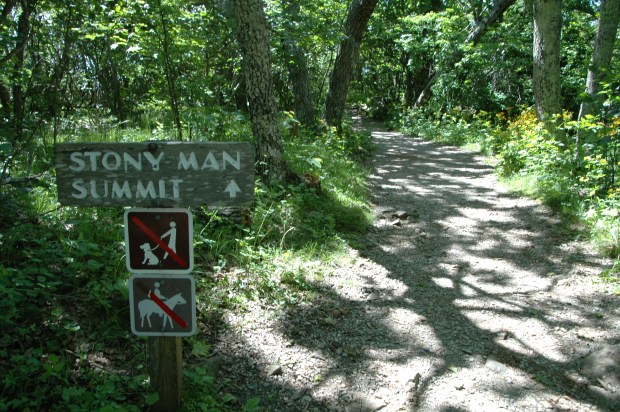
The trail led to the top of the mountain.
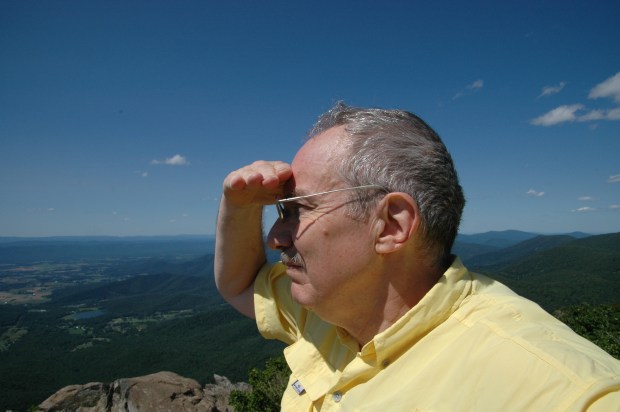
Where you could see for miles.
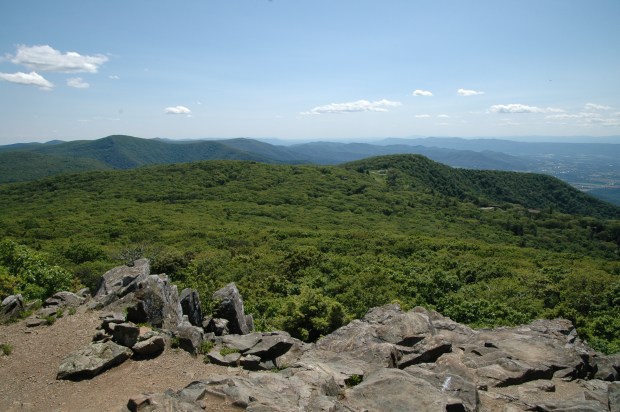
See
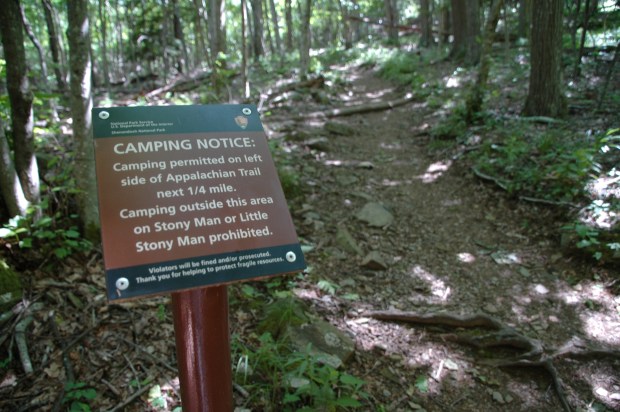
We walked along the Appalachian Trail for a ways, and noticed some strict rules for the long-distance hikers.
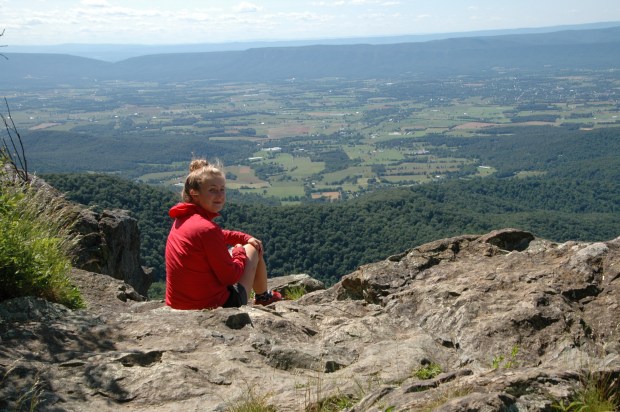
And had a chance to talk with one of the hikers, taking a break on a beautiful afternoon. She was headed north.
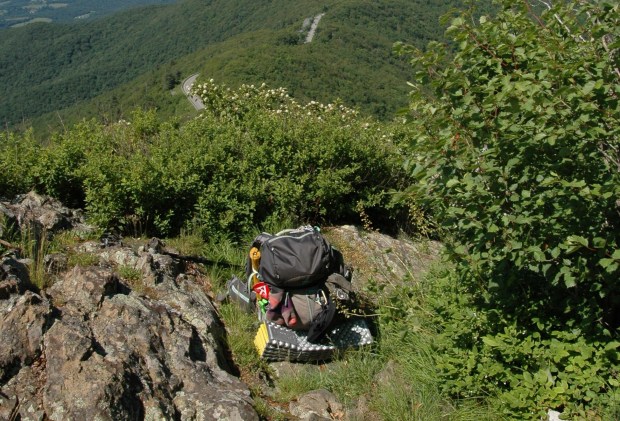
She carried everything she needed on her back.
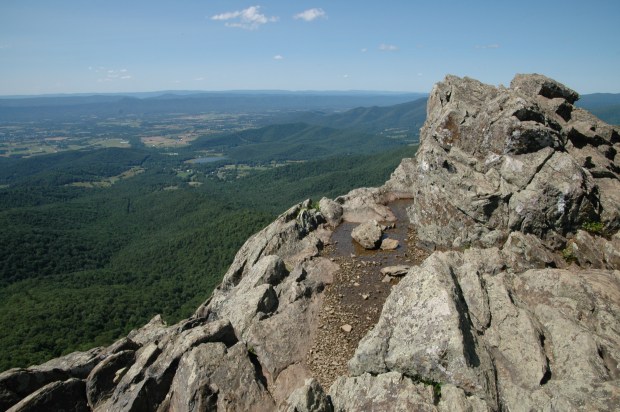
There were still a few puddles in the rocks from the overnight rains.

The next day wasn’t quite as sunny, as we toured the gardens at the Glen Burnie House, on the grounds of the Museum of the Shenandoah Valley.
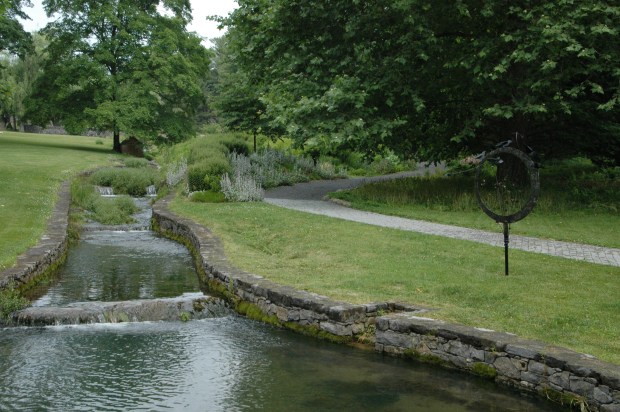
There are lots of paths through the beautiful gardens.
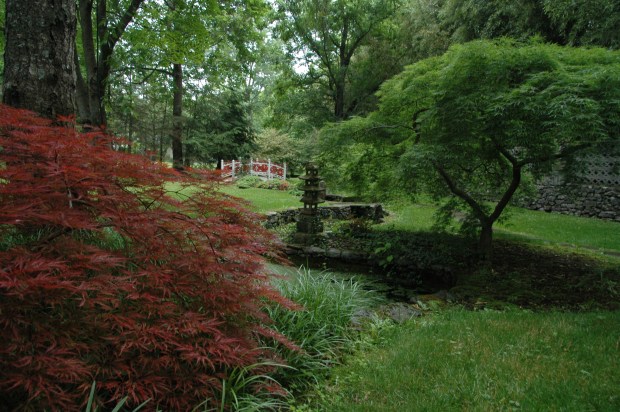
The oriental garden brought back great memories of others we have visited.
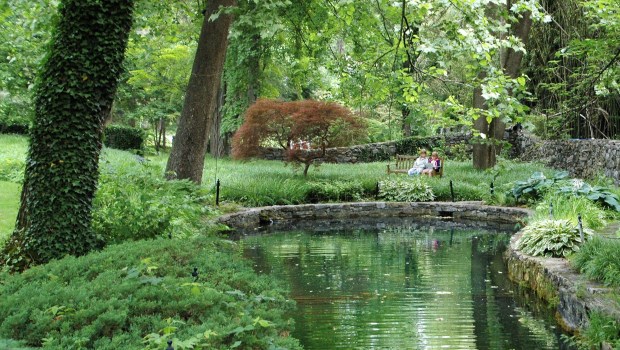
Lana and Audrey had some time for reflection.
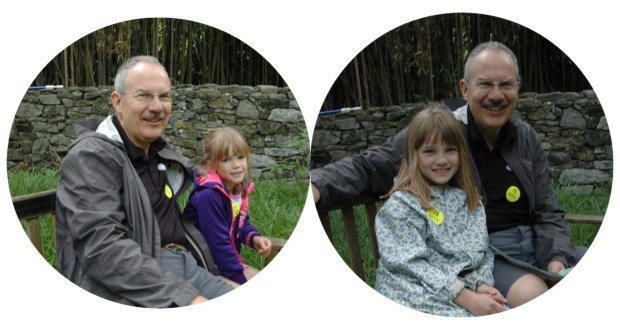
Then they got to take a picture of each other with grandpa.
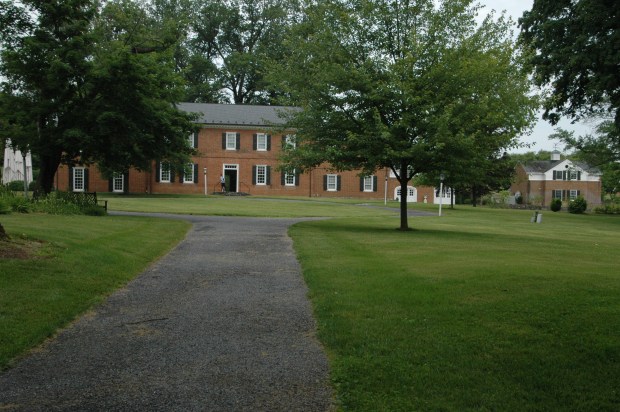
We also got to go inside the Glen Burnie house.
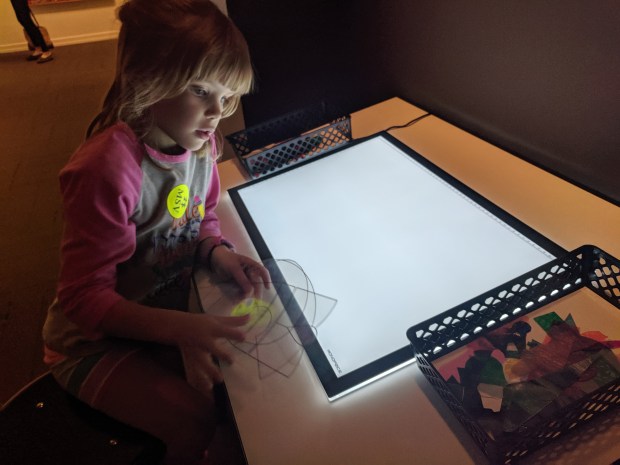
At the Museum of the Shenandoah Valley, there was a Tiffany Glass exhibit with a light table for kids to experiment with colors and shapes.
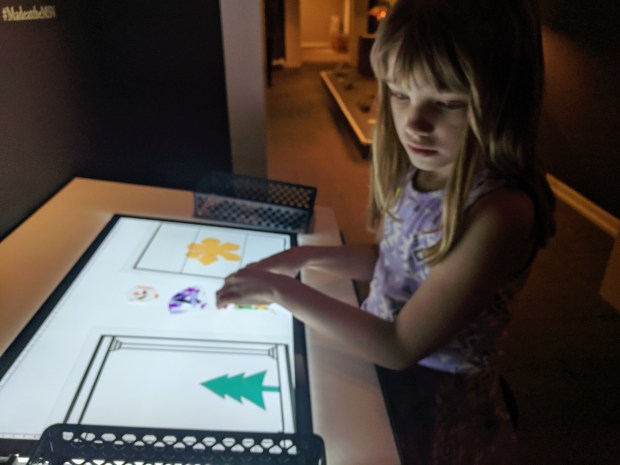
Both Lana and Audrey enjoyed experimenting.
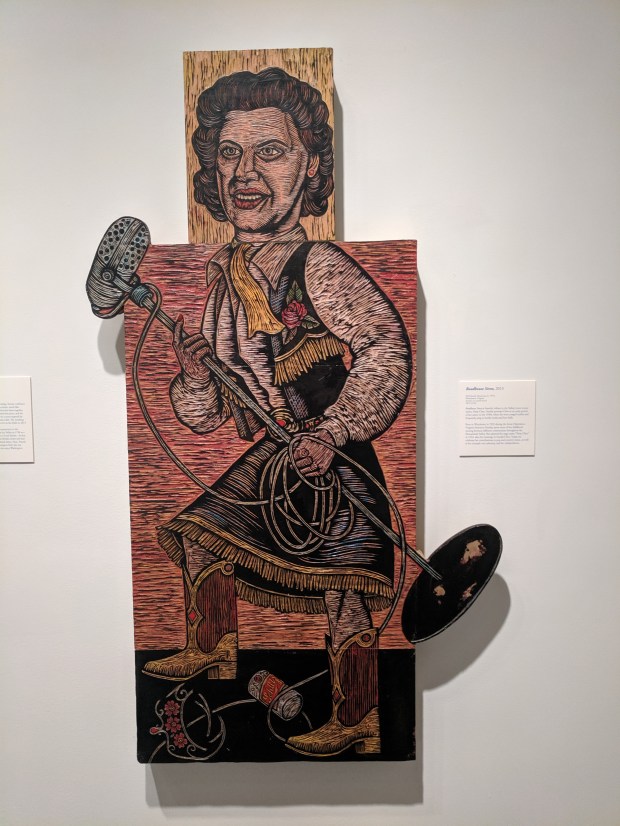
The museum had some art depicting hometown singing sensation Patsy Cline.
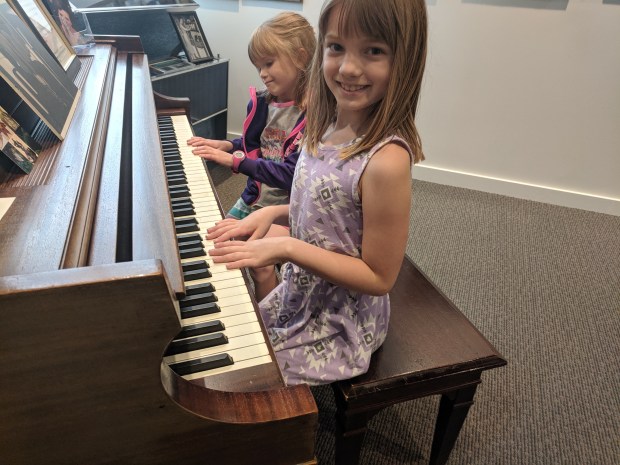
Earlier in the day, at the Winchester Visitors Center, Lana and Audrey got to play Patsy Cline’s piano.
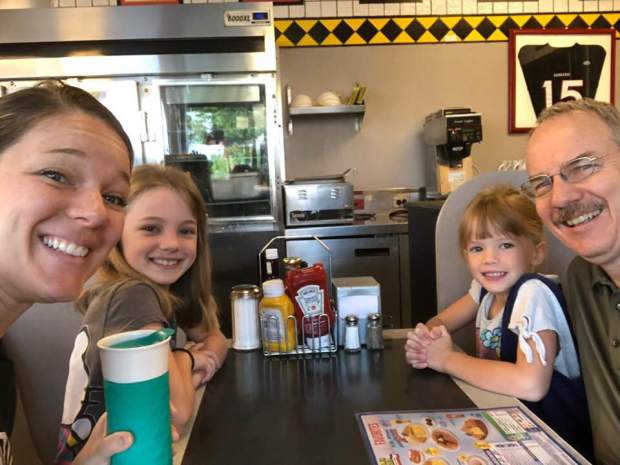
The next day started out with breakfast at Waffle House, a first for all of us. (And it was great.)
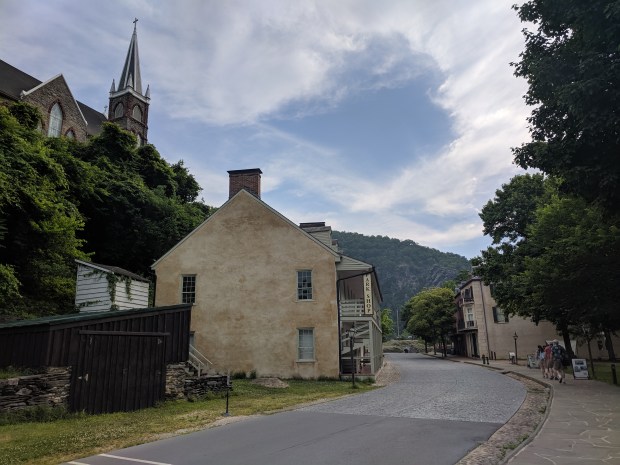
Our next stop was Harpers Ferry, WV, an historic city.
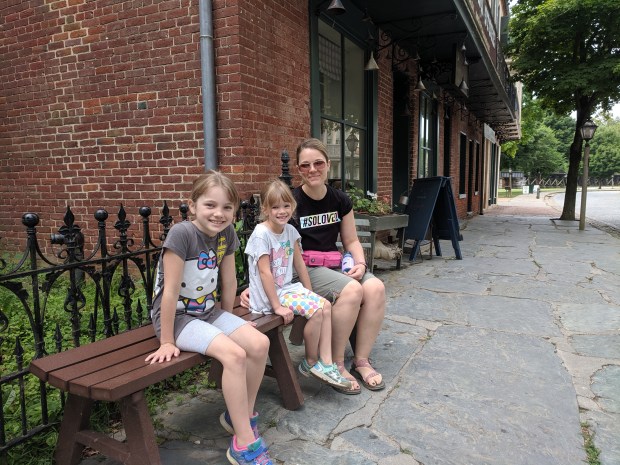
We got to Harpers Ferry early in the morning, before the crowds.
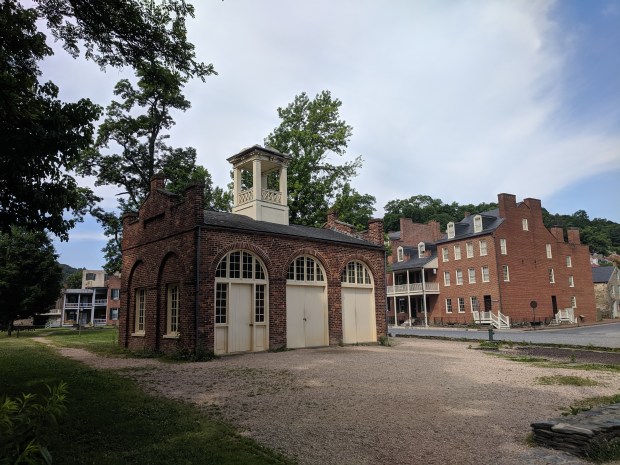
This is the firehouse that became John Brown’s Fort in 1859. We enjoyed the historic displays and film presentations in various buildings.
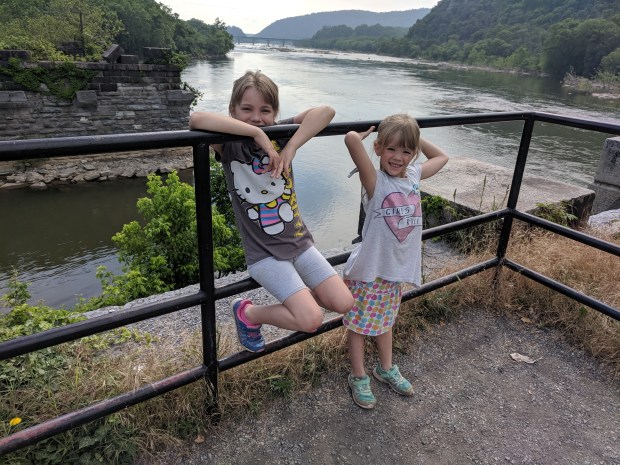
Lana and Audrey reenact a famous family photo of their uncles Drew and Grant when they were a similar age visiting another National Monument. Behind them, the Shenandoah River joins the Potomac River.
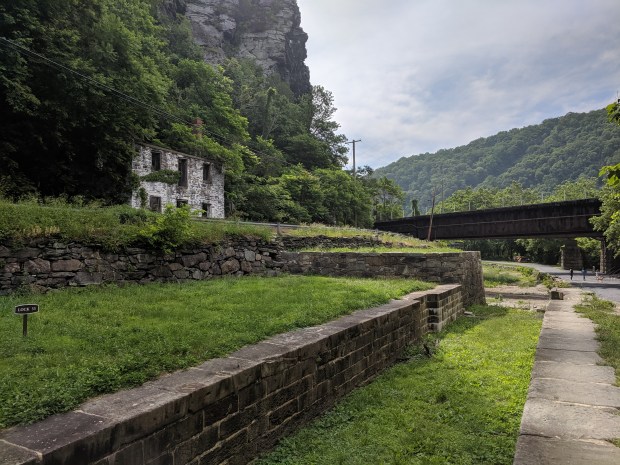
We walked across the Potomac River on the footbridge, to the Maryland side, where we saw the remains of one of the locks of the old Chesapeake and Ohio Canal.
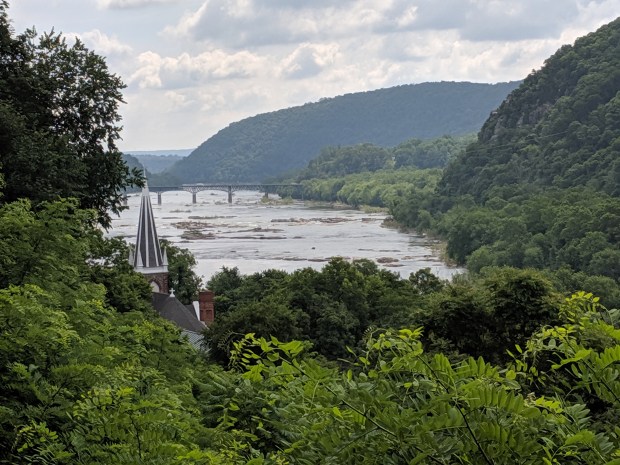
We also hiked up the hill to Jefferson Rock, with another view of the Potomac and Shenandoah confluence.
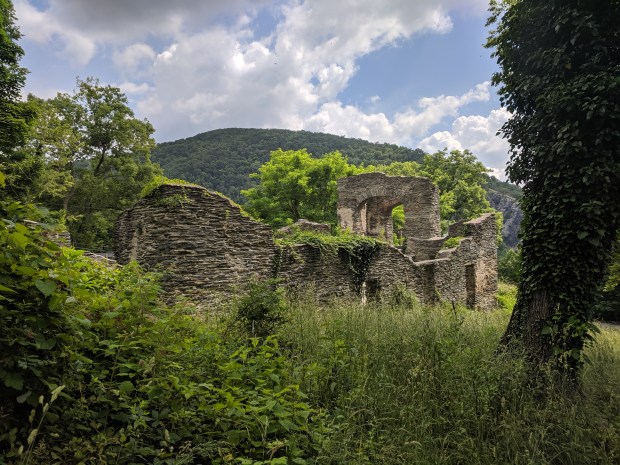
We studied the scenic ruins of St. John’s Episcopal Church.
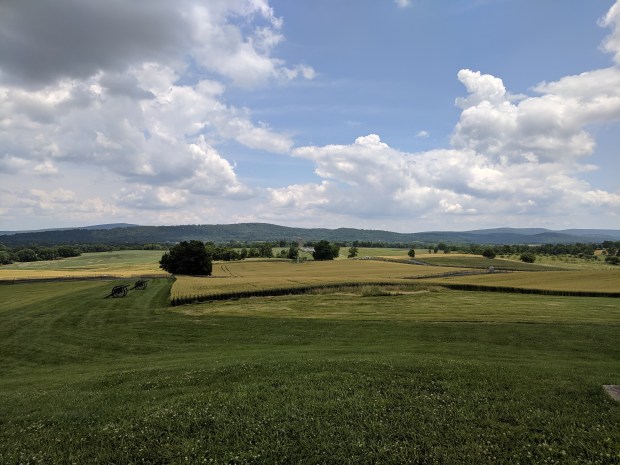
From Harpers Ferry we drove a few miles north to Sharpsburg, MD, and the Antietam battlefield National Park.
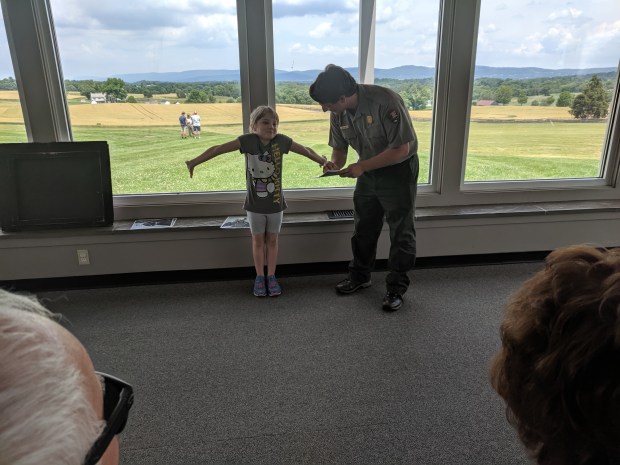
Lana was chosen to help with the Ranger talk, portraying a Union soldier being interogated by Stonewall Jackson’s men after being captured at Harper’s Ferry. Aside from the fact that she forgot her name, it went well.
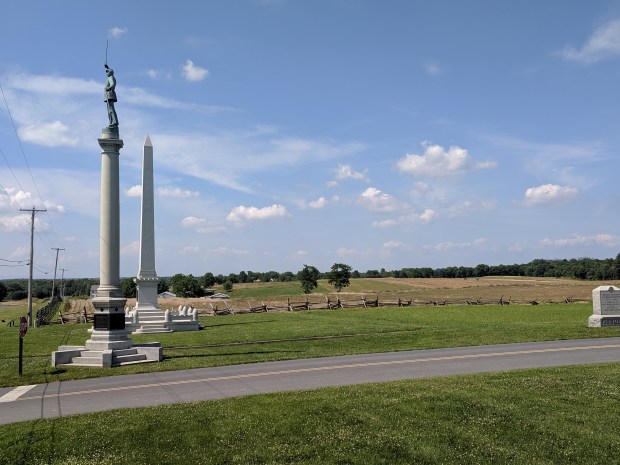
The battle at Antietam in September, 1862, was the bloodiest single day in American military history. Nearly 100,000 soldiers were involved in the battle and about 23,000 were killed, wounded, or missing. One of the centers of conflict was known as The Cornfield, where the Iron Brigade from Wisconsin sustained heavy losses.
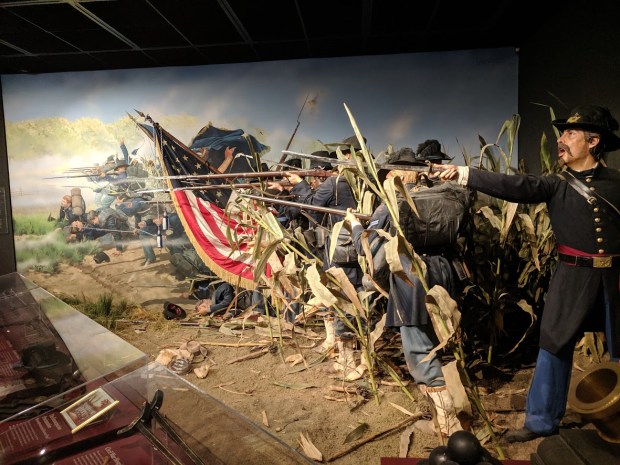
This display at the Wisconsin Veterans Museum in Madison depicts the Iron Brigade in The Cornfield at Antietam. They were known as tough fighters but many lives were lost that day.
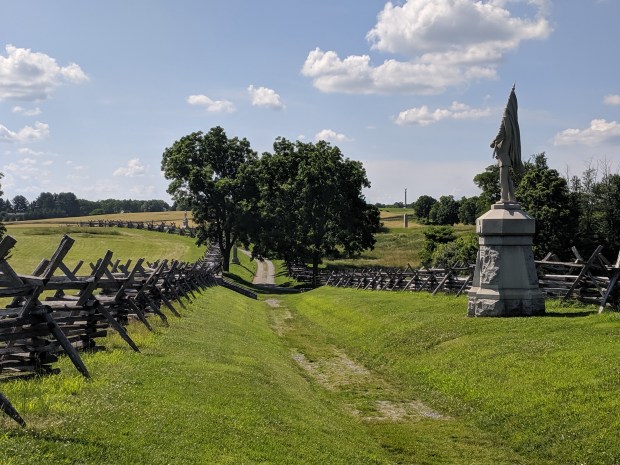
The Sunken Road was another area where the casualty toll was very high on both sides.
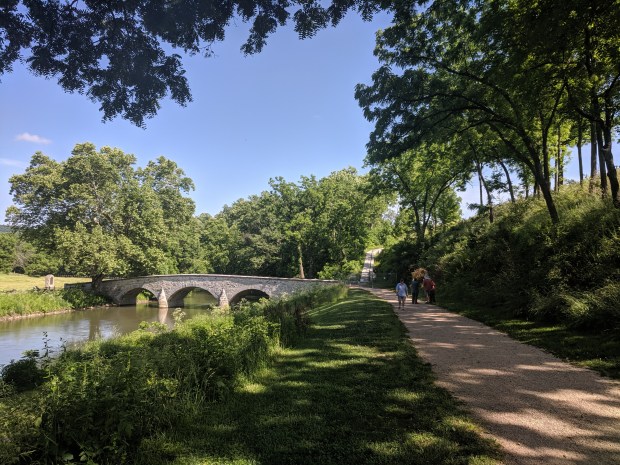
The sycamore tree at the eastern end of the lower bridge is still in place, 157 years later.
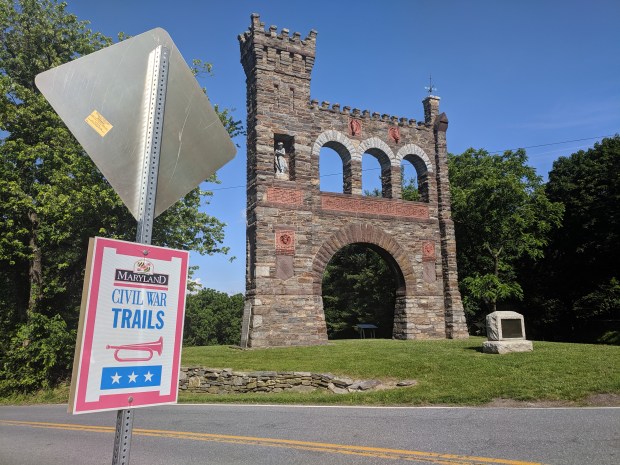
Our final stop of the day, the War Correspondents monument at Crampton’s Gap. Apparently the only such monument in the world.

Our final day of site seeing started out in downtown Winchester, where we visited George Washington’s office, from his days as a surveyor.
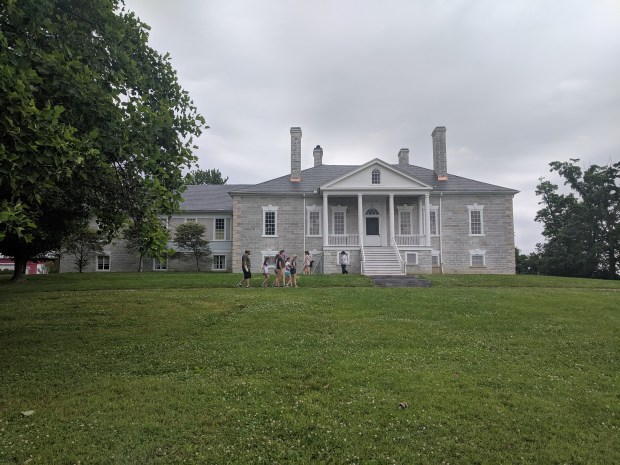
Then on to Belle Grove manor house, built in 1797 by the sister of president James Madison and her husband (and designed by Thomas Jefferson).
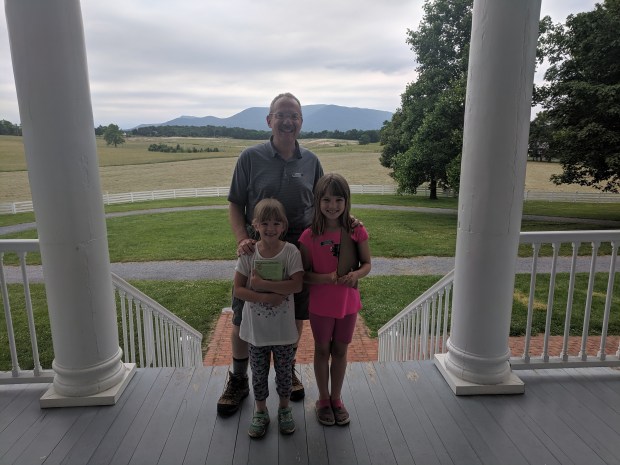
No photos from inside the house, but we did get a behind-the-scenes tour because the guide forgot to unlock the front door. Such a beautiful view of the Shenandoah Valley.
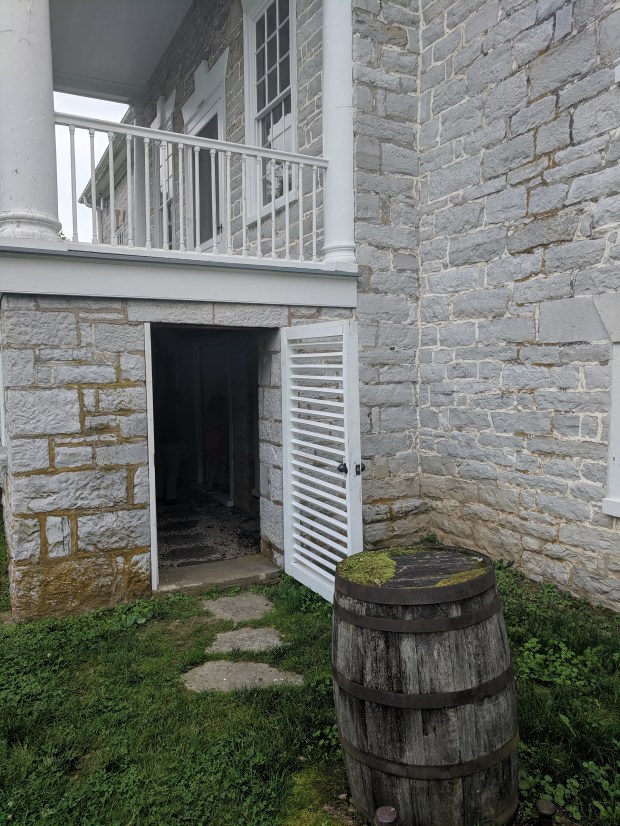
After seeing the main rooms of the house, we moved to the basement to see the kitchen.
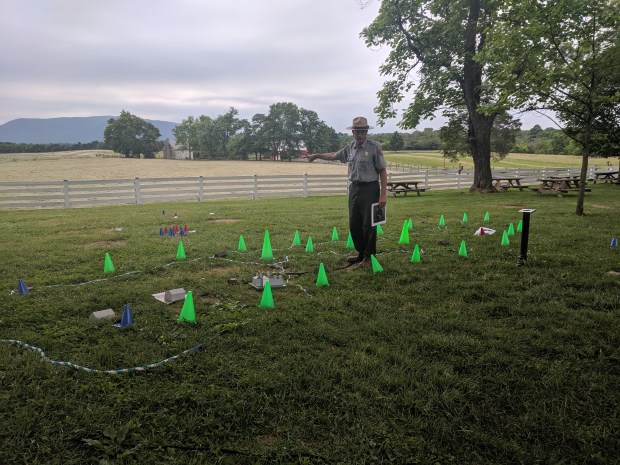
The Belle Grove plantation was the scene of a major Civil War battle, the Battle of Cedar Creek, which was ably described for us on the front lawn by one of the park rangers.
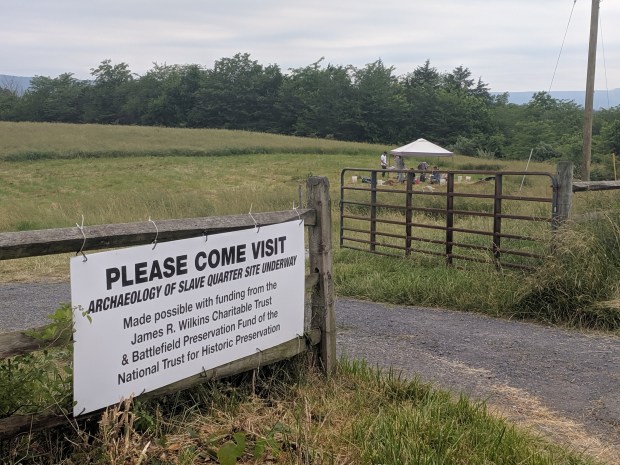
The Belle Grove plantation was also the scene of an archaeological excavation, which immediately drew my attention.
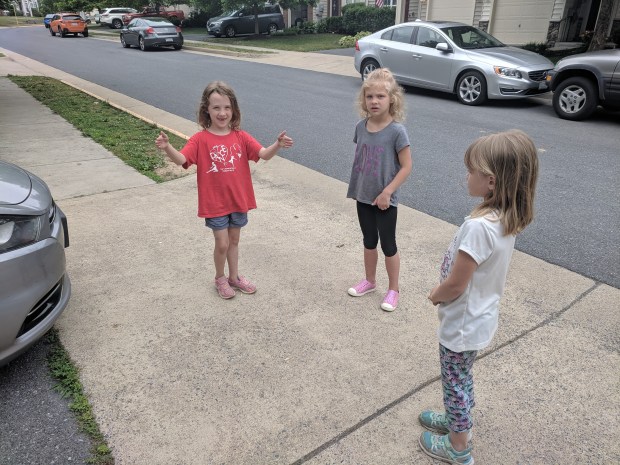
At the end of the day we returned home to find major drama. A snake had been sighted in the woods, and it was this long.
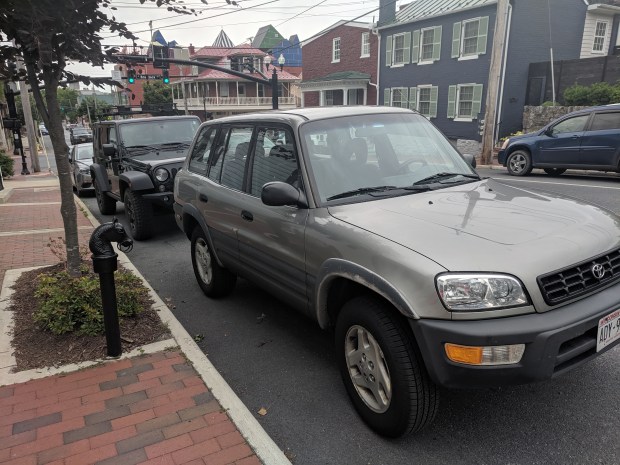
The following day I pointed my car back towards Wisconsin, thankful for a wonderful week to spend with my granddaughters, and for a reliable 20-year old Toyota with 200,000 miles and still going strong.
 RADIOSCRIBE