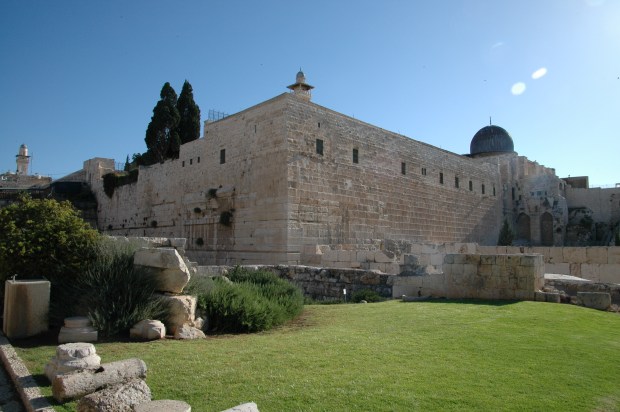
For our third and final day in Jerusalem, we once again made our way in the early morning to the Temple Mount.
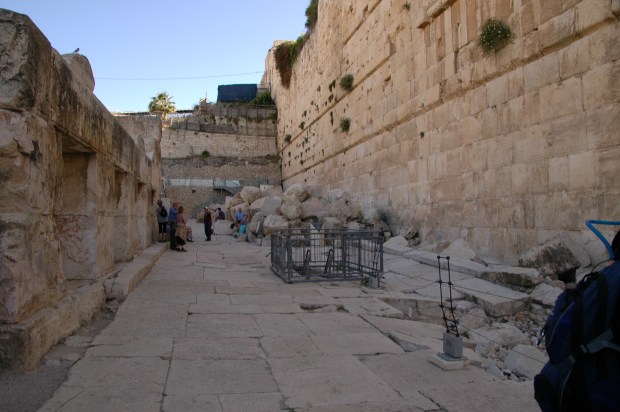
This time we began at the southwestern corner of the Temple Mount, underneath Robinson’s Arch on the excavated first century street, where doorways to the shops of ancient merchants can be seen on the left and the stones thrown down from above by conquering Roman soldiers are still where they landed.
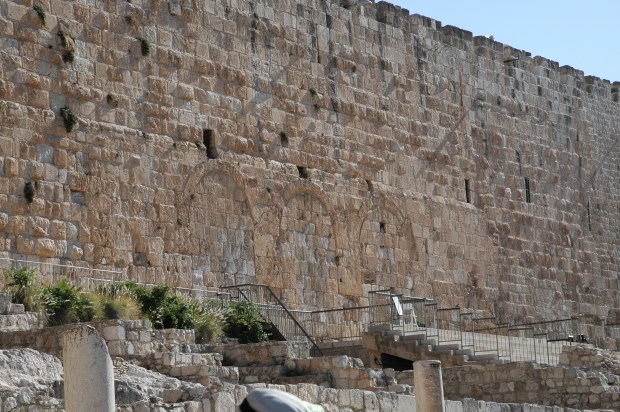
The southern steps led up to the Huldah Gates, through which passed the Jewish pilgrims on their ascent to the Temple. Though now closed, the outline of the gates can still be seen in the facade of the southern wall.
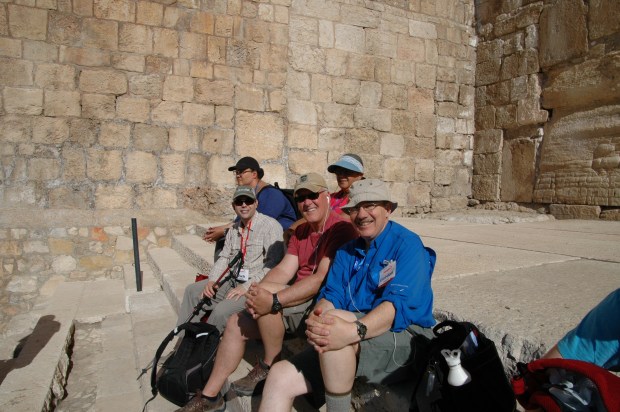
We parked ourselves on the southern steps.
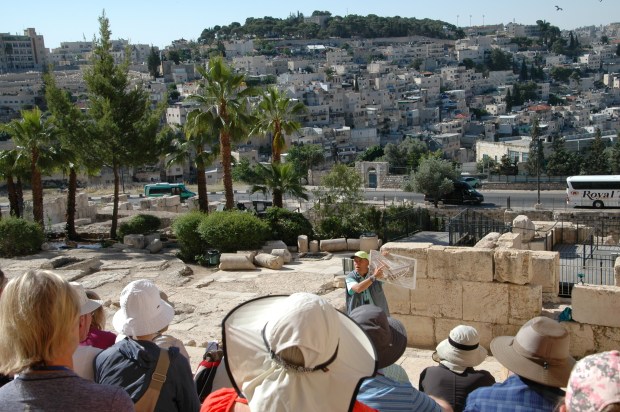
Ready for some teaching from Dr. John DeLancey about the ancient Temple, with the Arab village of Silwan in the background.
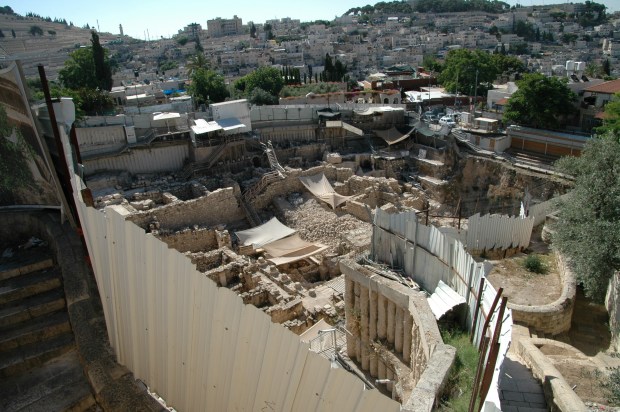
Exiting the Temple Mount we made our way past the massive Givati Car Park excavation. Whatever has been planned to be built on the site of this former parking lot is having to wait for a number of years while the excavators dig through layer after layer of accumulated history (with some amazing discoveries).
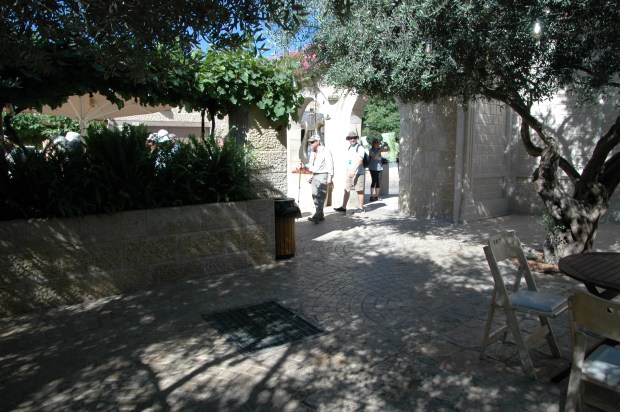
We entered the City of David archaeological park, where excavations of the oldest part of Jerusalem, have revealed much about life in the time of the Old Testament. Underneath that grate in the foreground, for instance, is an ancient cistern, currently off limits, which I visited in 2001. It may have been the cistern into which Jeremiah was cast, as recounted in Jeremiah 38.

While we waited to begin our tour of the City of David, I noticed a very creative tipping jar at the cash register.
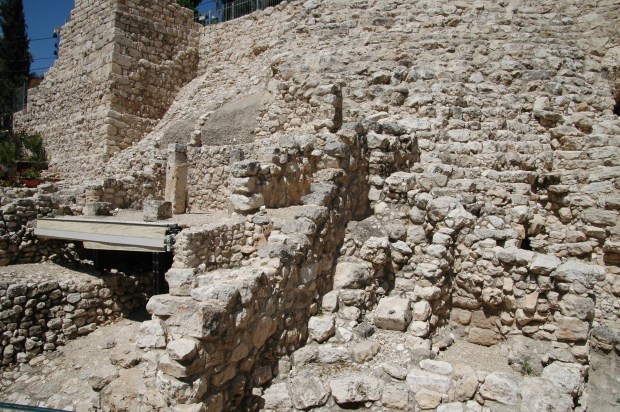
The Stepped Stone structure, excavated in the 1970s, may be the millo that is referenced several times in Kings and Chronicles. Dr. DeLancey worked as a volunteer on this excavation.
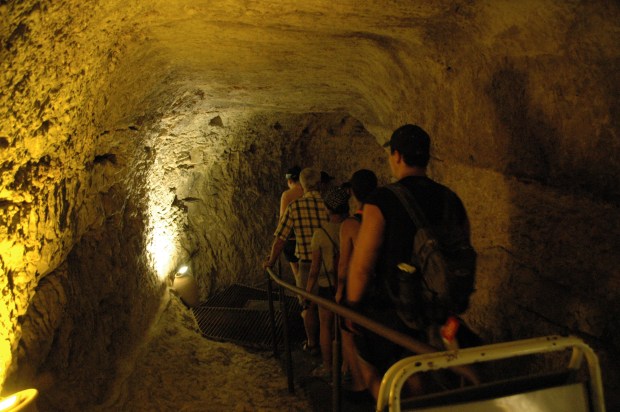
At this point the underground tour began, as we approached Warren’s shaft.
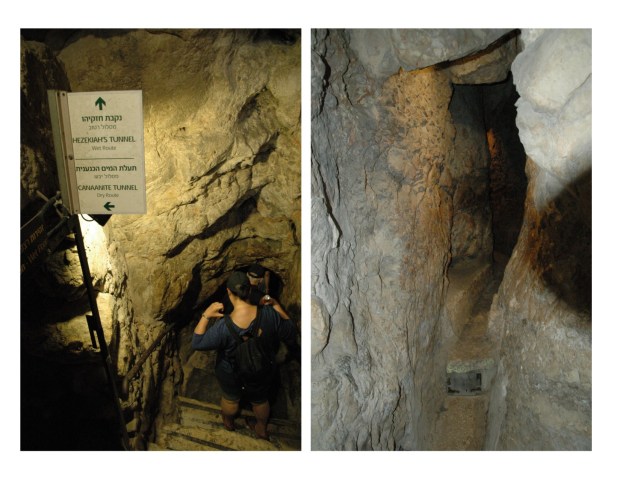
As much as I like going through Hezekiah’s Tunnel (the world’s oldest civic works project still in operation), I decided it was time to find out what the Canaanite Tunnel was like. The Canaanite Tunnel shown on the right, is similar to Hezekiah’s Tunnel, although not nearly as long and without water flowing through it.
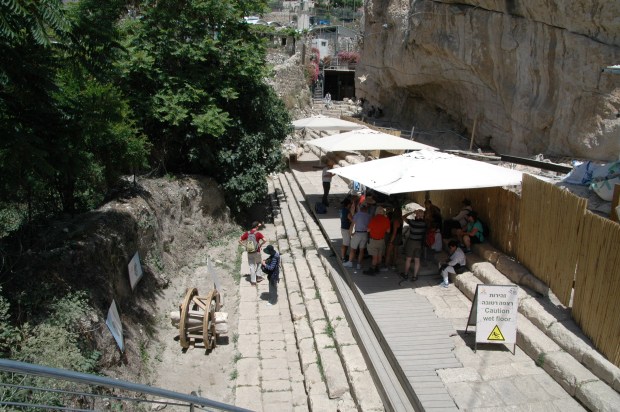
At the end of Hezekiah’s Tunnel is the Pool of Siloam, partially excavated fairly recently, after it was discovered during a sewer line repair.

The underground tour then continued back up to the Temple Mount, via the very recently excavated first century street and water channel.

Our group later ended up at the Garden Tomb, a traditional but archaeologically unsupported site for Jesus’ burial and resurrection.

Four of us, though, split off from the group and hopped a bus to Nazareth to prepare for walking the Jesus Trail.
That’s a story for another post.
 RADIOSCRIBE