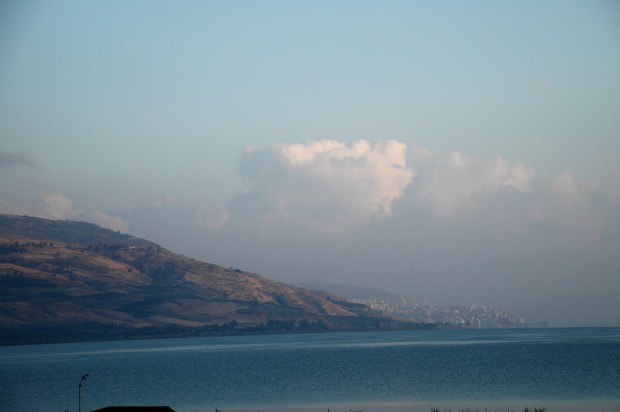
Woke up one last morning on the shore of the Sea of Galilee with the city of Tiberias in the distance. Enjoyed our stay at Maagan Kibbutz Holiday Village.
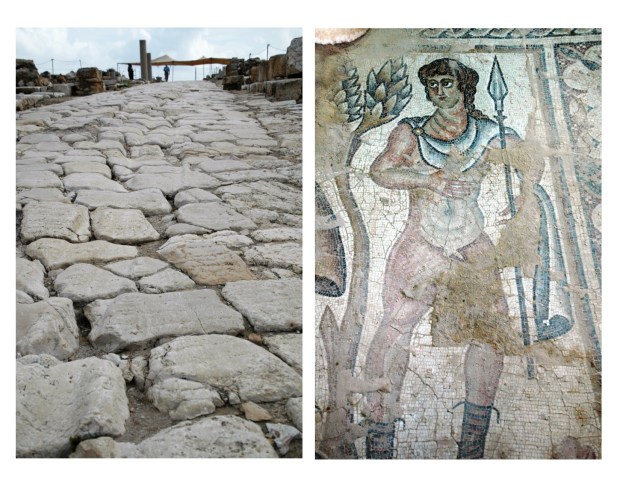
Our first walk of the day was down the streets of Sepphoris, where the stones are still rutted from the chariot and wagon wheels of 2,000 years ago. The streets lead to public buildings containing beautiful Byzantine mosaics.
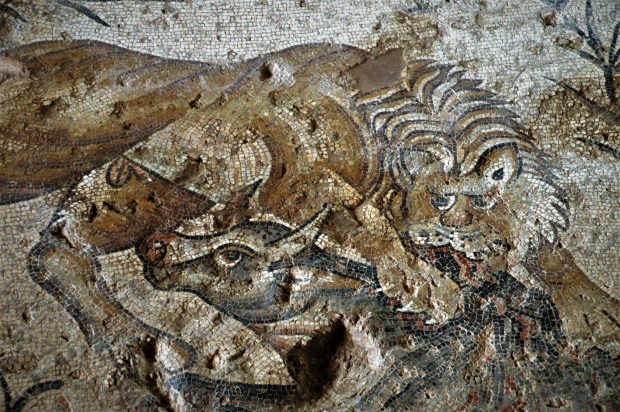
The mosaics of Sepphoris are among the most beautiful in Israel but more mosaics are being found on a regular basis in many places in the region.
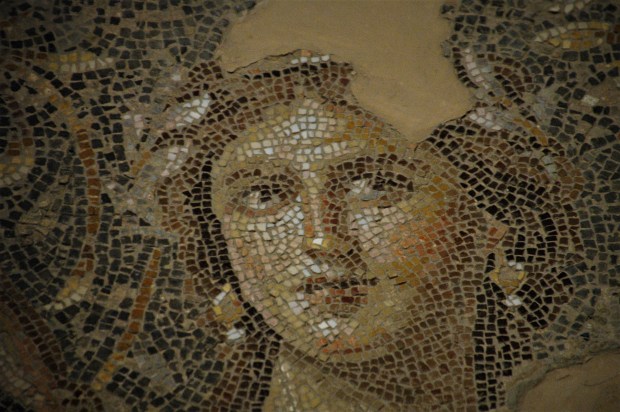
Among the most famous of Sepphoris mosaics is one called The Mona Lisa of the Galilee.
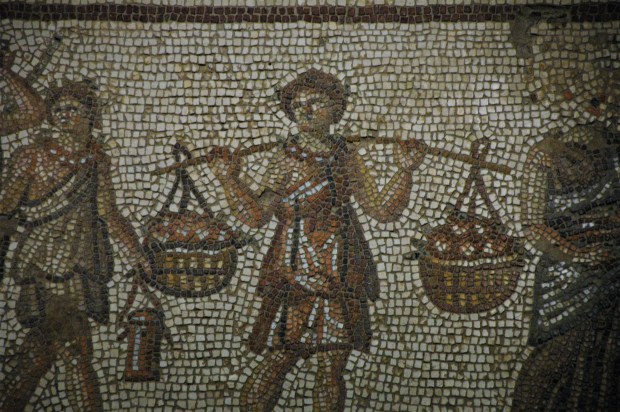
Another mosaic tells the story of Dionysius.

Next we skirted Nazareth and got a beautiful view of this bustling city from a place called the Precipice. The Church of the Annunciation, shown here, is said to be the largest church in the Middle East.

At the Precipice, we had a devotional service, looking out over the beautiful Jezreel Valley.
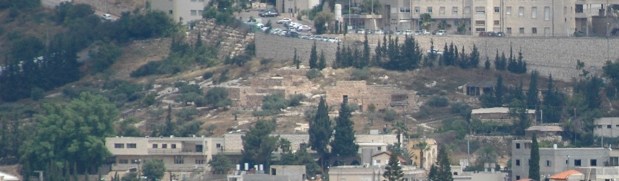
From the Precipice we could also see Nazareth Village, a recreated first century historical park in the middle of the big city, which we will visit on our next tour.

We crossed the Jezreel Valley and came to one of the most famous archaeological sites in Israel, Megiddo. In the book of Revelation, it’s called Armageddon. These stairs lead to the gate of the Bronze Age city, from 3500 years ago.
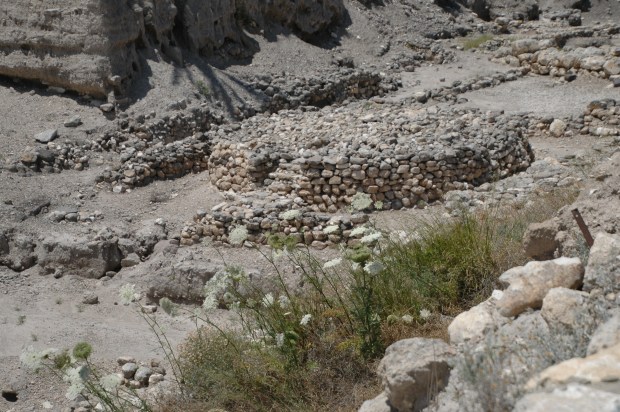
The Bronze Age circular altar for cultic worship.

From the top of Tel Megiddo, the Megiddo Prison can be seen, which is due for decommissioning soon. Inside it’s walls the remains of a second century Christian prayer house have been discovered. Between the Tel and the prison, the remains of a second century Roman Legion camp have been excavated. All of this area may soon be developed for visitors.
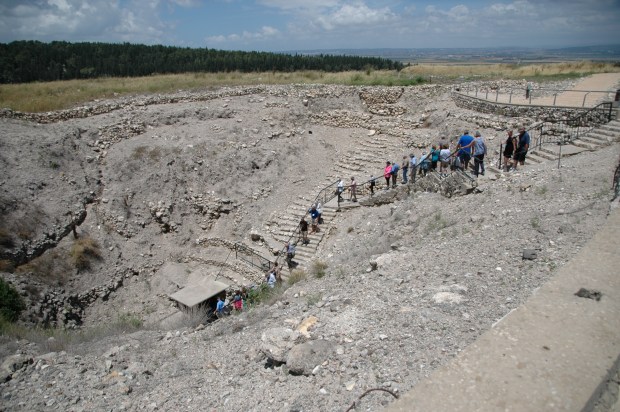
Descending to the Megiddo Water Tunnel.
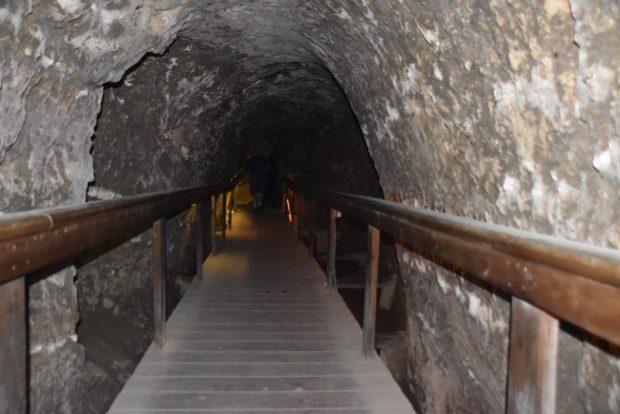
Leaving Megiddo through the 3,000-year old water tunnel.
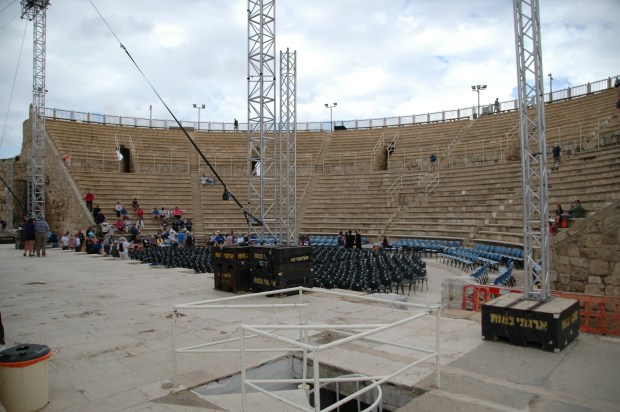
On to Caesarea Maritima, the port city created by King Herod, where the 2,000-year old Roman theater is still used for performances.
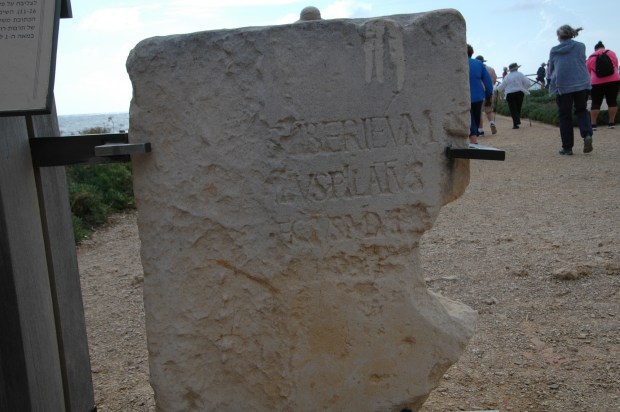
A replica of an inscription mentioning Pontius Pilate, found at Caesarea by Italian excavators in 1962.
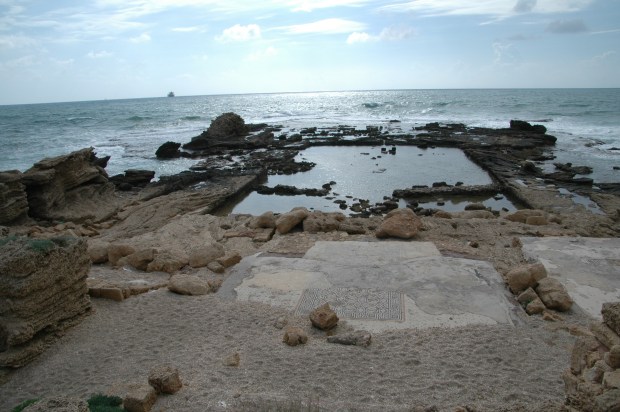
This is where Herod built his palace, overlooking the Mediterranean Sea, with a seaside pool.
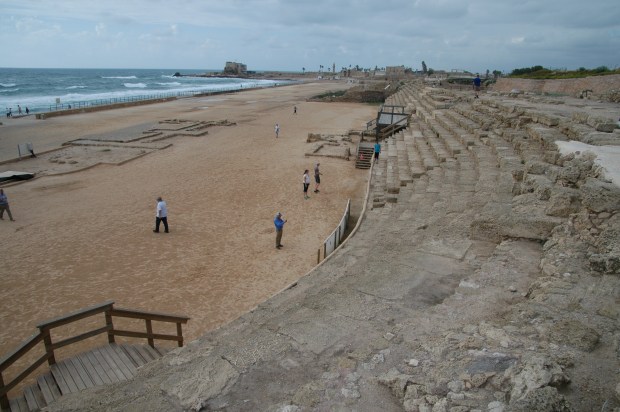
This seaside hippodrome was later abandoned and used for other purposes as a larger one came into use nearby.
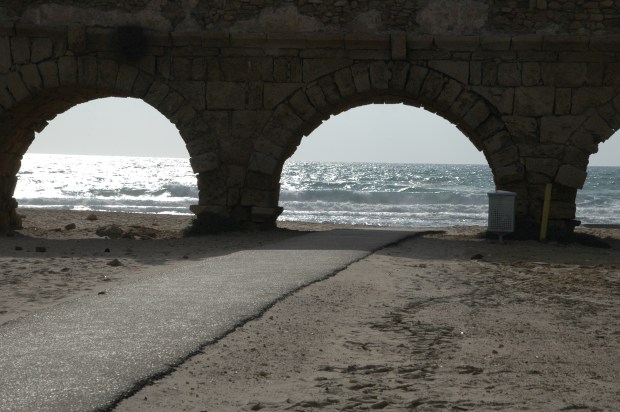
The remains of a Roman aqueduct remain in place at Caesarea.
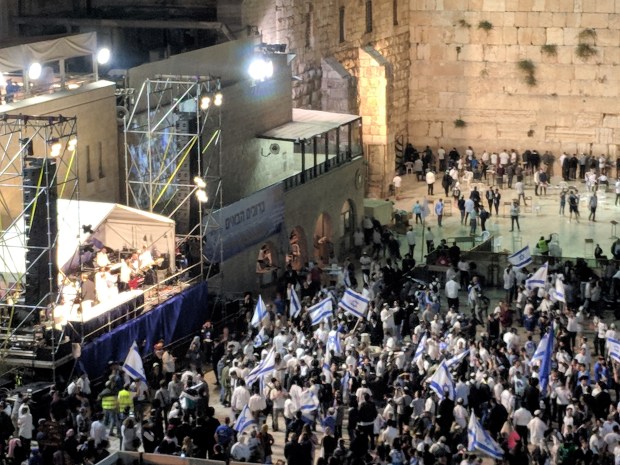
We left Caesarea, drove through heavy traffic past Tel Aviv, and made it to our hotel in Jerusalem. Then a quick evening excursion to the Western Wall plaza, where the 70-year celebration of Israel’s independence was underway.
On to the next blog post in Jerusalem.
 RADIOSCRIBE