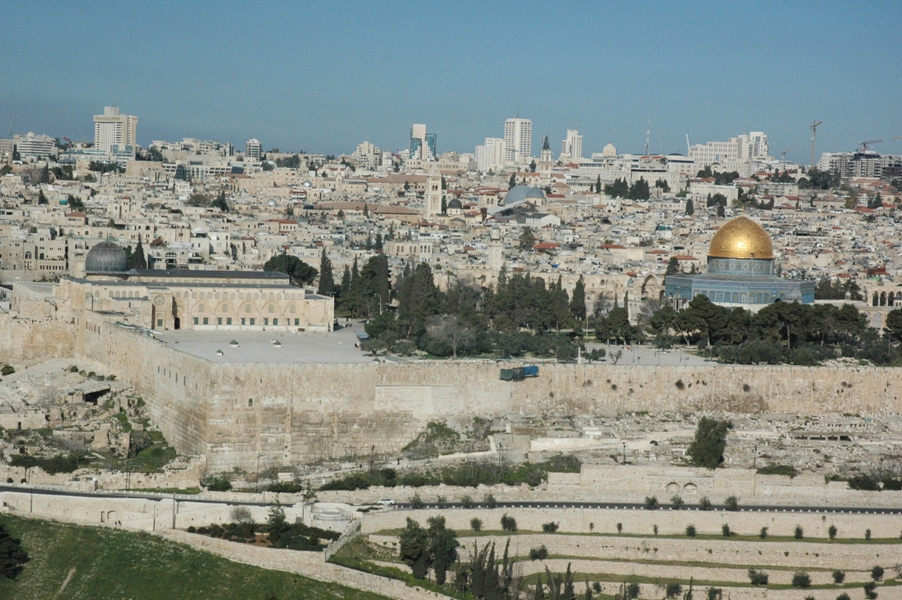
The Old Cityscape
Our first stop on our first morning in Jerusalem was, where else, the Mount of Olives and the world-famous vista: the Old City walls, dating to the 16th century, with the Dome of the Rock (7th century) and Al Aksa mosque (8th century) in the foreground.
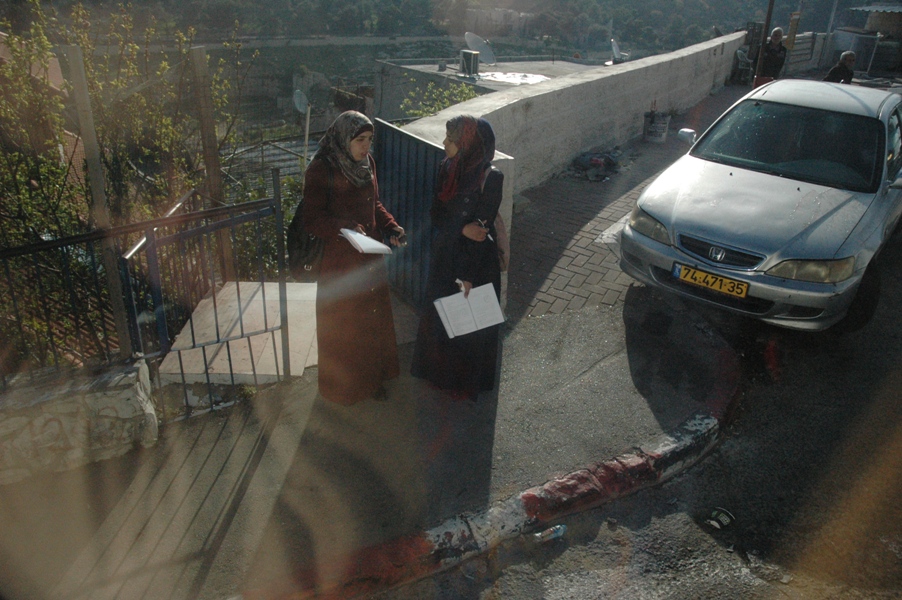
Comparing Notes
Along the way, driving through the city early in the morning, we see Jerusalem residents going to work, going to school, in various activities from our bus window.
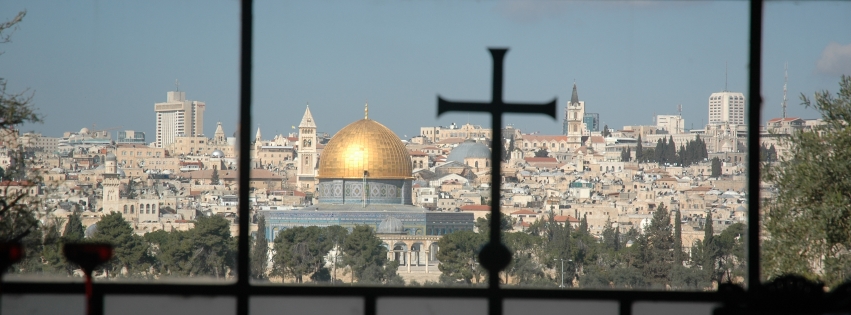
Dominus Flevit chapel
As we walked the path down the Mount of Olives to the Garden of Gethsemane, we stopped at the chapel of Dominus Flevit (The Lord wept), with its own iconic view of the Temple Mount.
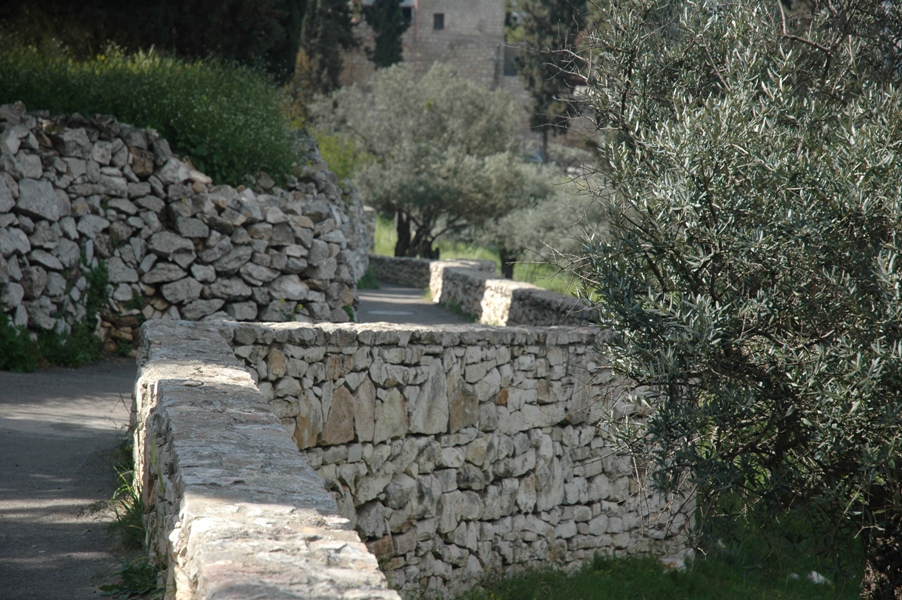
Garden Path
We continued on through several olive groves (it is the Mount of Olives), reading the gospel accounts of Jesus’ triumphal entry into Jerusalem on Palm Sunday, and his betrayal by Judas less than a week later.
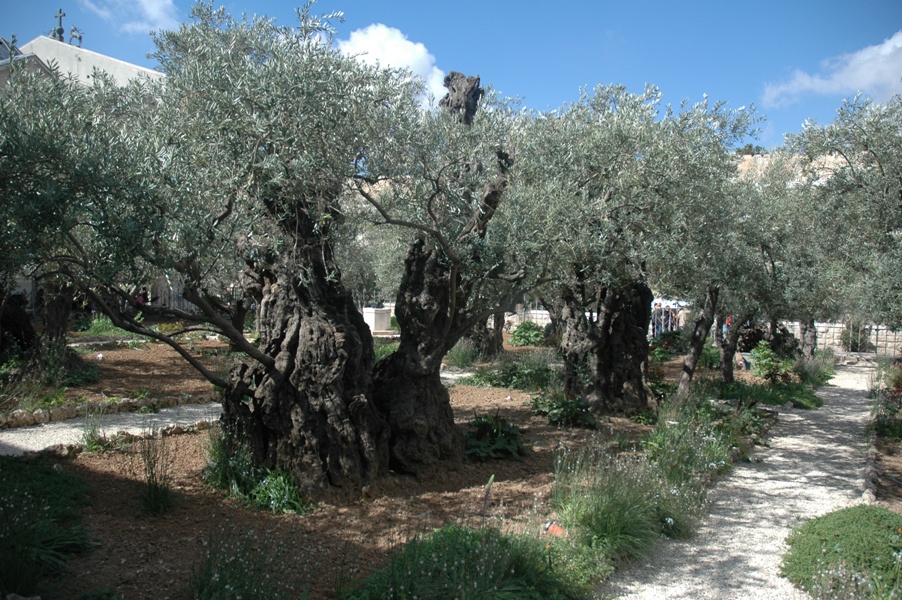
Garden of Gethsemane
The olive trees in the Garden of Gethsemane are ancient, but probably not quite 2,000 years old.
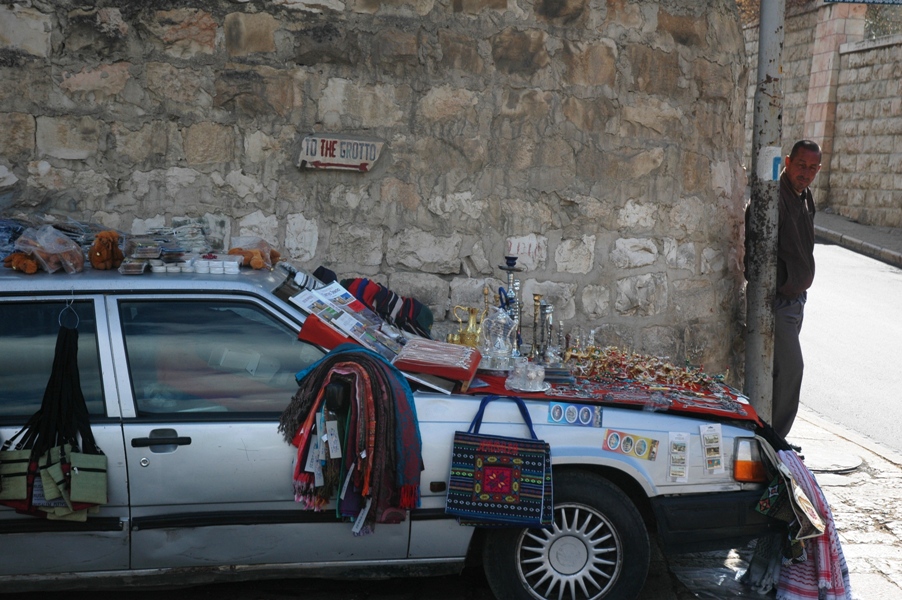
Garden Souvenirs
At the bottom of the Temple Mount, near the Garden of Gethsemane, the souvenir venders lie in wait
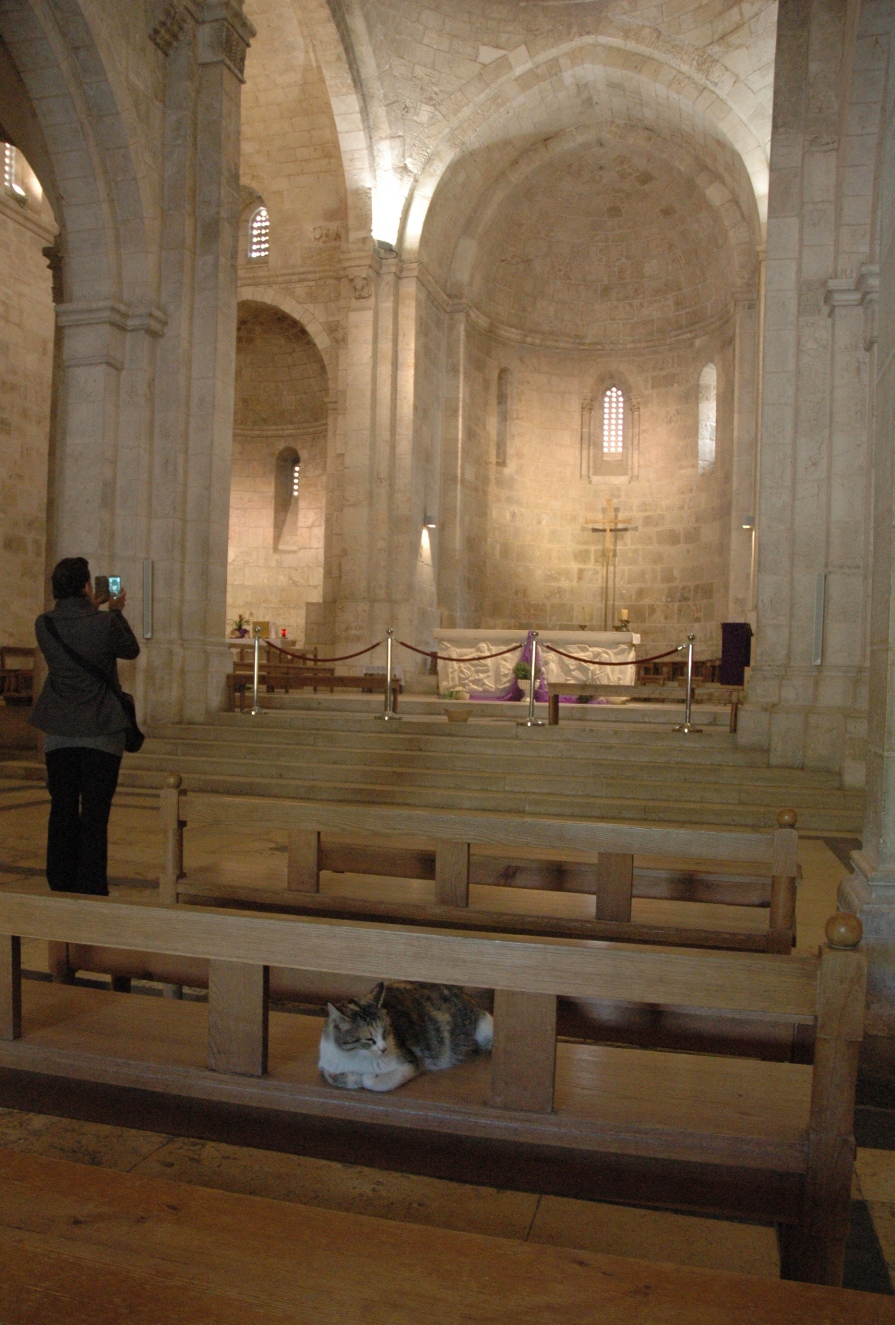
St. Ann’s Church
We crossed the Kidron Valley and entered the Old City through the Lion’s Gate. Our first stop is St. Ann’s Church, a Crusader construction with incredible acoustics. Every group who visits has to sing a song or two.
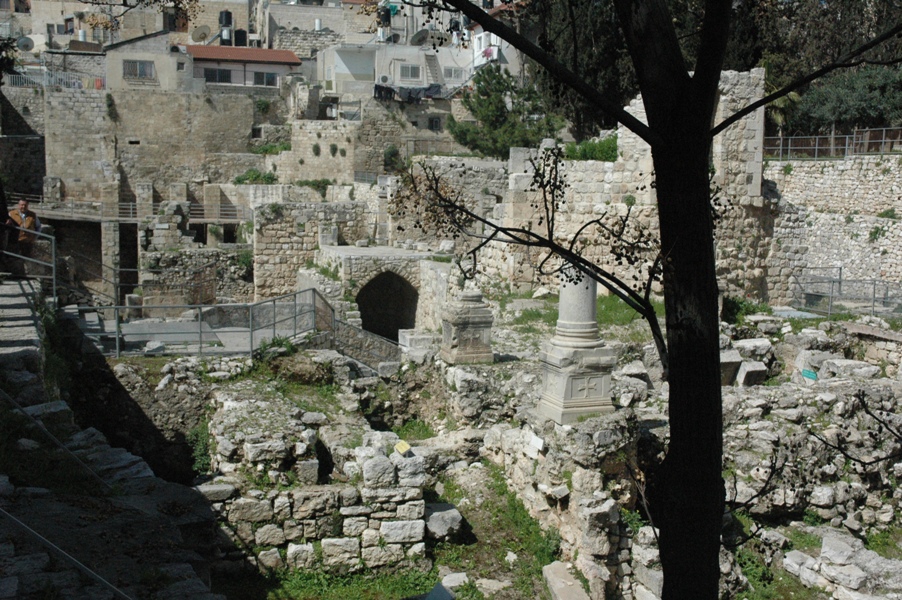
Pools of Bethesda
Outside of St. Ann’s Church are the Pools of Bethesda.
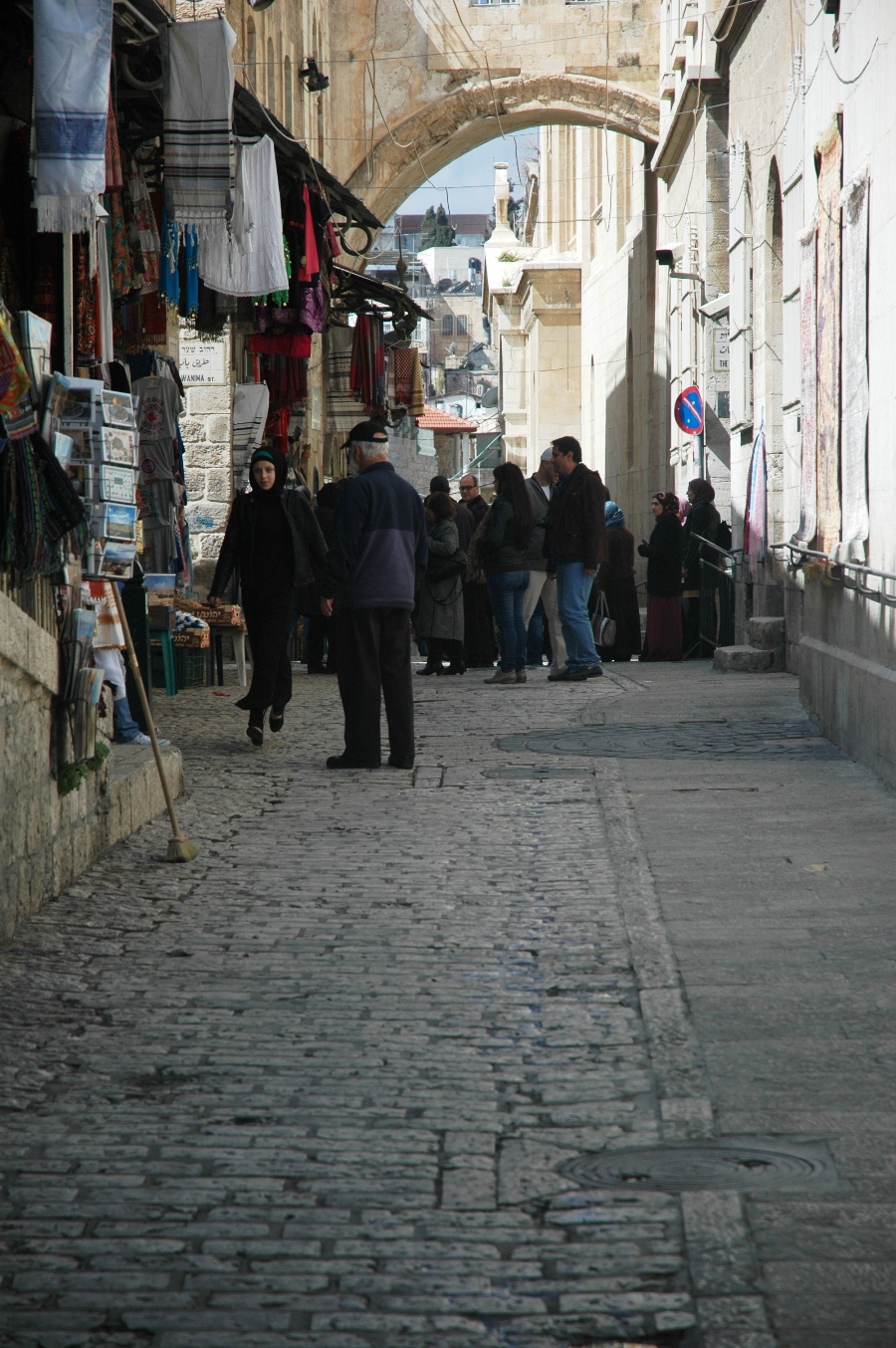
The Via Dolorosa
We walked the way of the pilgrims, the Via Dolorosa.
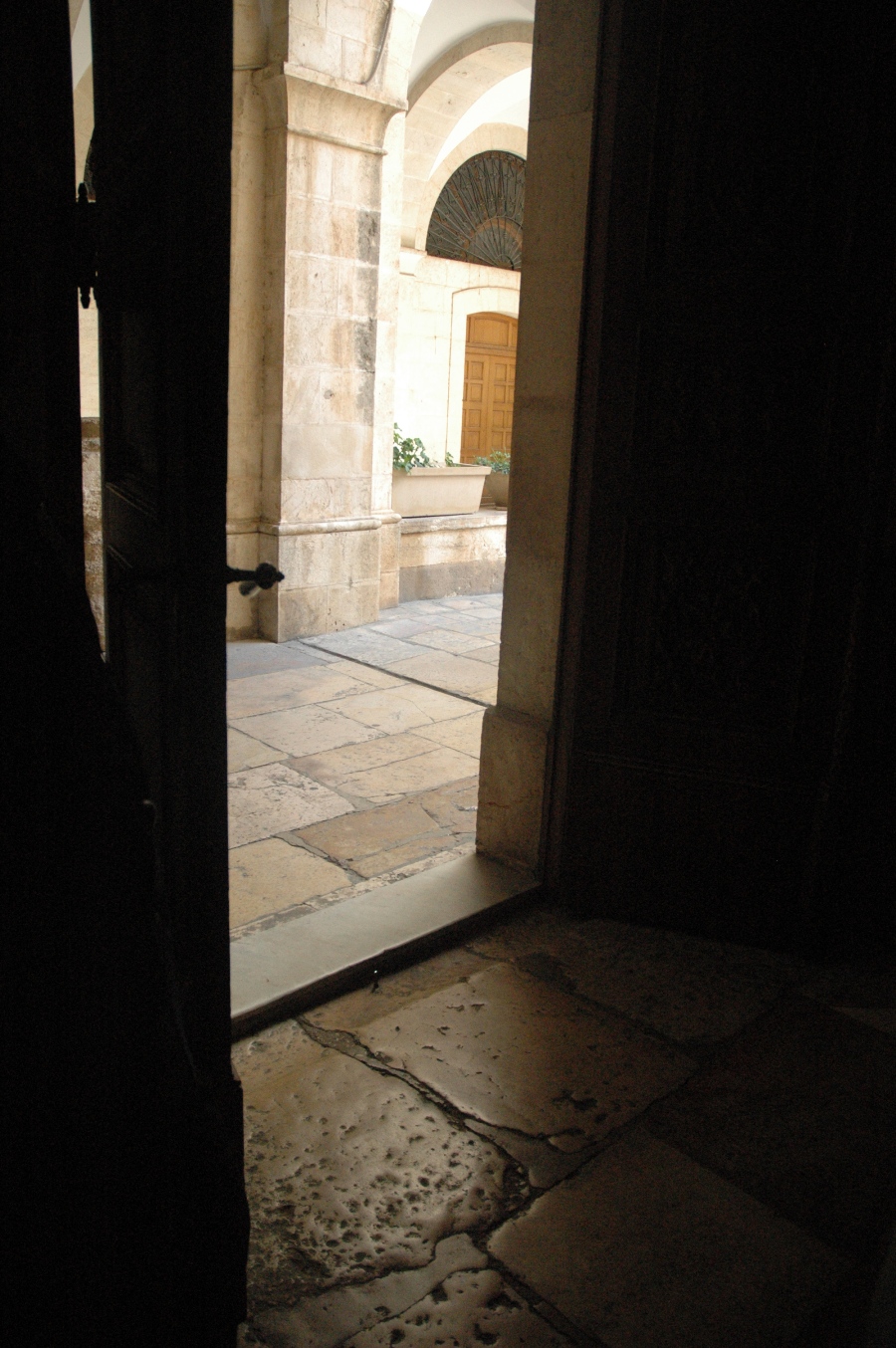
Well-trodden stones
These stones have been trodden by pilgrims for centuries.
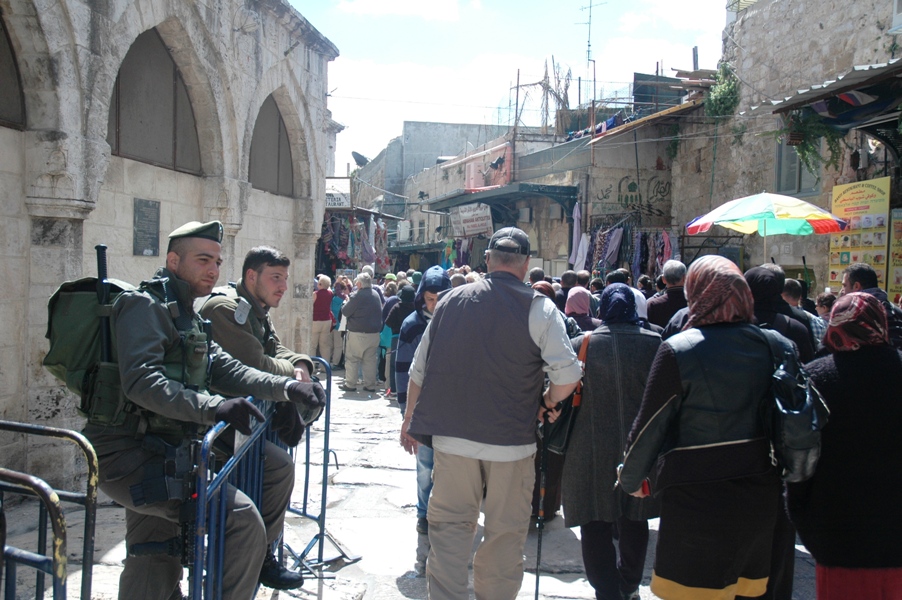
Watching the crowds
Soldiers are everywhere in Israel, but we never felt threatened or in danger.
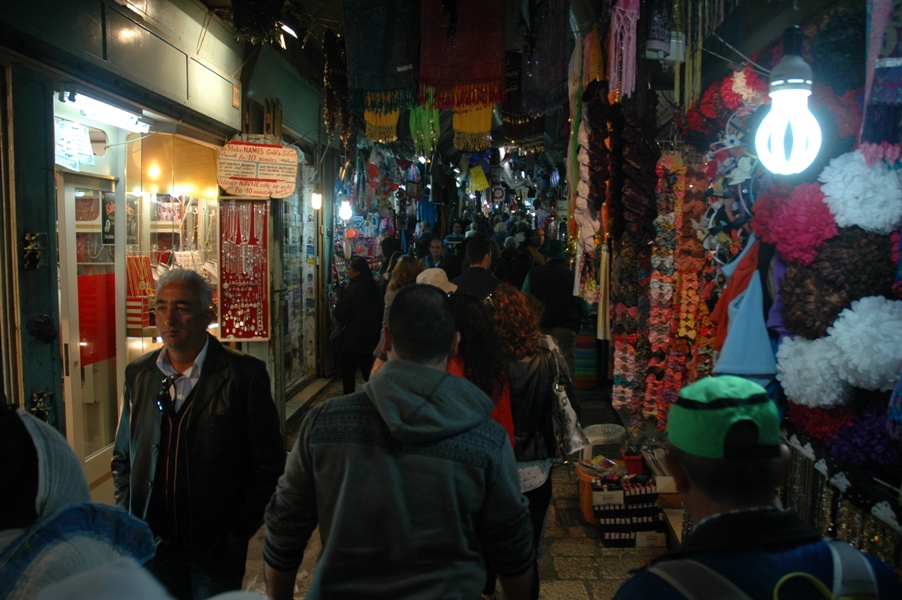
The Suq
There are lots of opportunities for shopping in The Suq, the markets of the Old City.
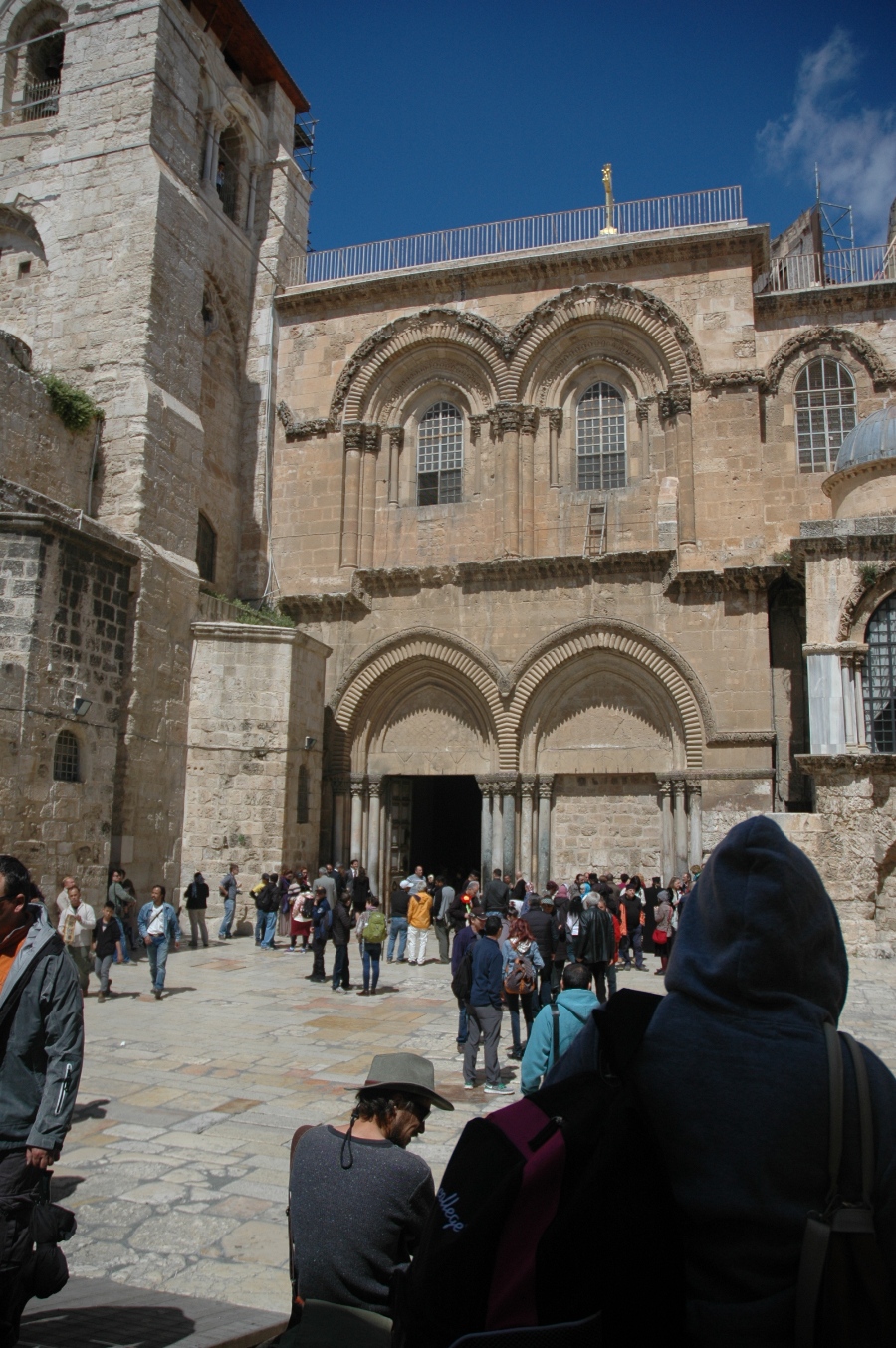
The Church of the Holy Sepulchre
The Church of the Holy Sepulchre is the destination of the pilgrims who walk the Via Dolorosa.
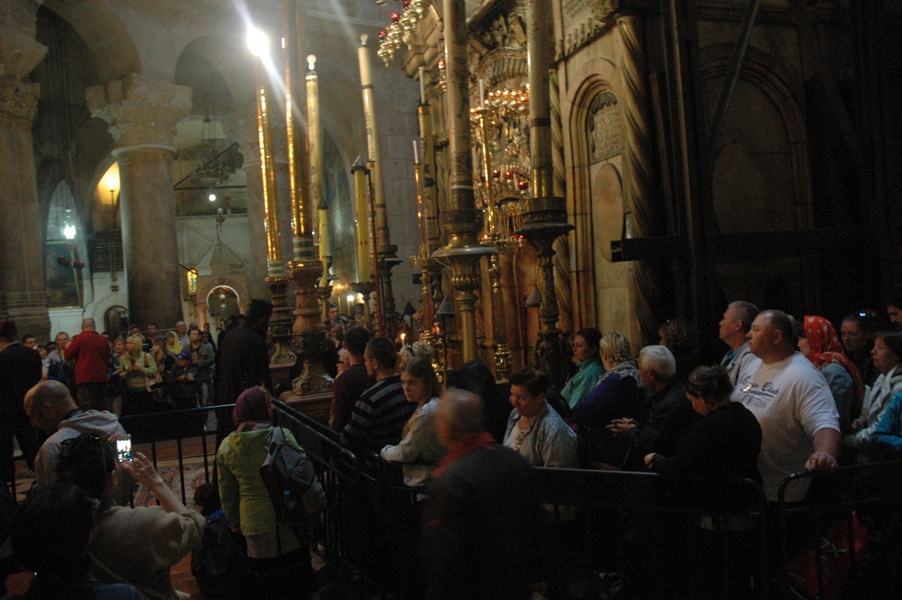
Inside the church, outside the edicule
Inside the church there are long lines to get inside of the edicule, which marks the traditional site of Jesus’ tomb.
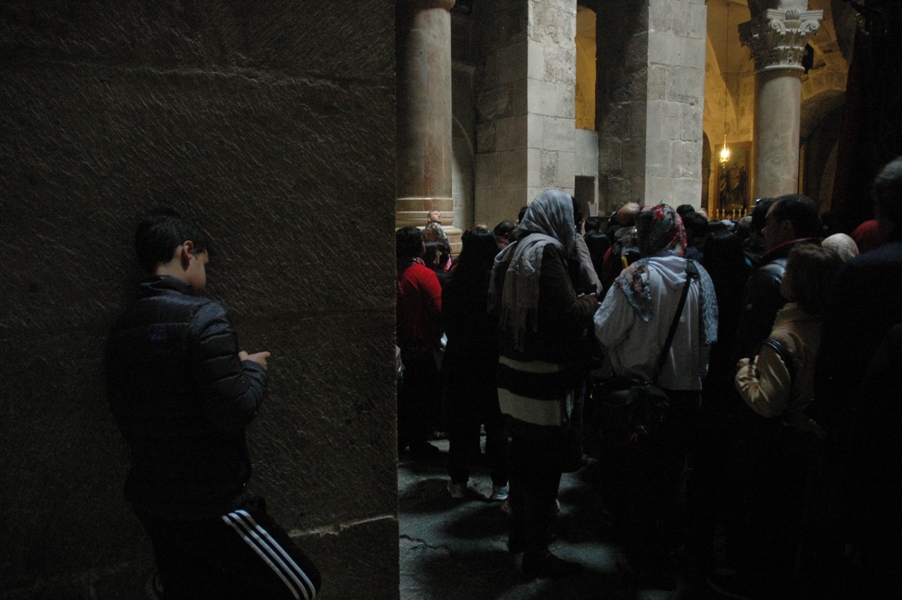
Killing time
It is a long wait. Perhaps some people who wait are praying. Some are not.
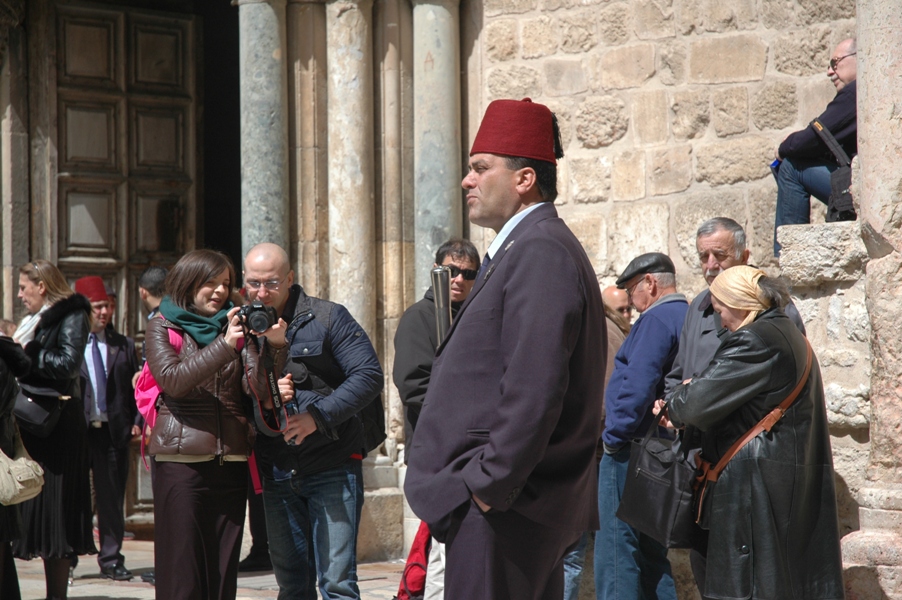
People watching
Sitting outside of the Church of the Holy Sepulchre is a good place to watch people, all kinds of people.
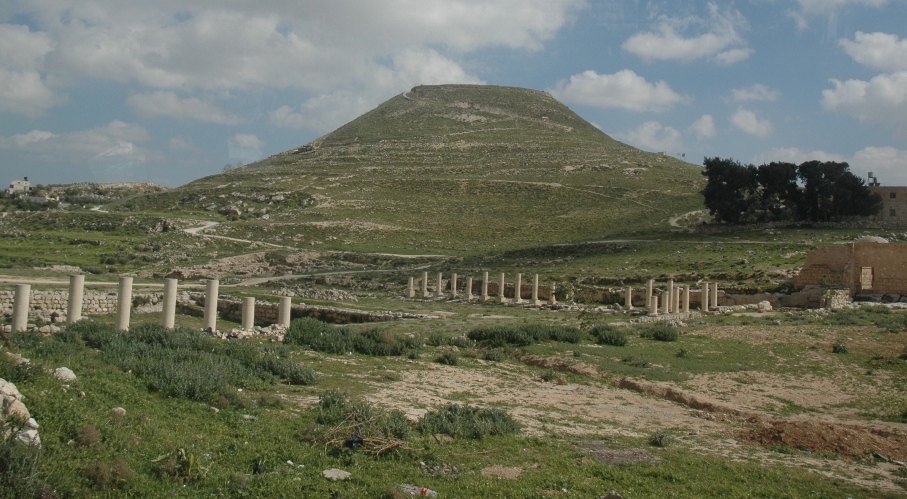
Herodium
From the Old City we drove out into the wilderness (desert) of Judea to visit another of Herod’s fortress palaces, Herodium.
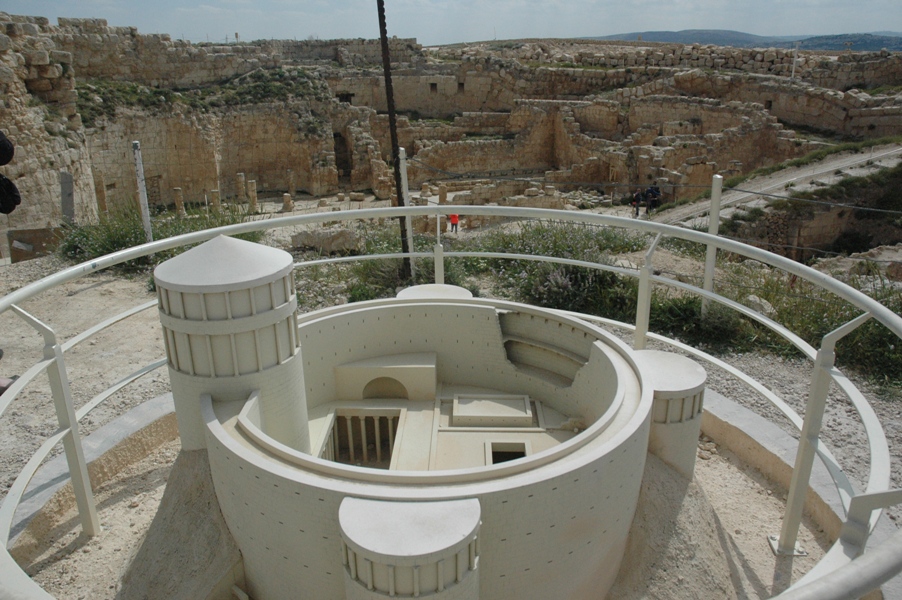
Model palace
A model shows what Herodium looked like after it was built by Herod.
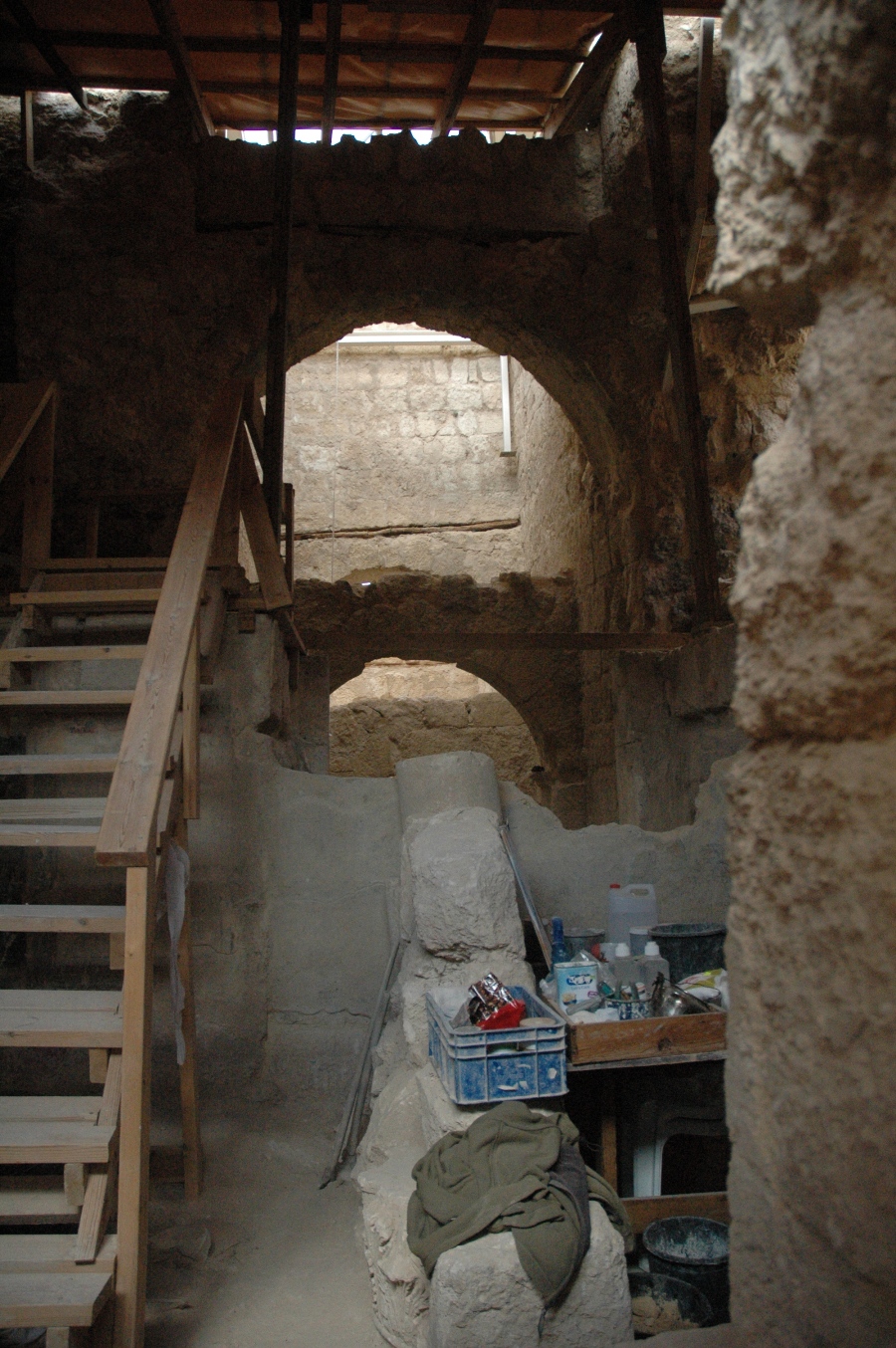
The Monumental Entrance
Through a crack in the doorway we got a peek at the monumental entrance to Herodium, discovered just in the past couple of years, and due to open to visitors next year.
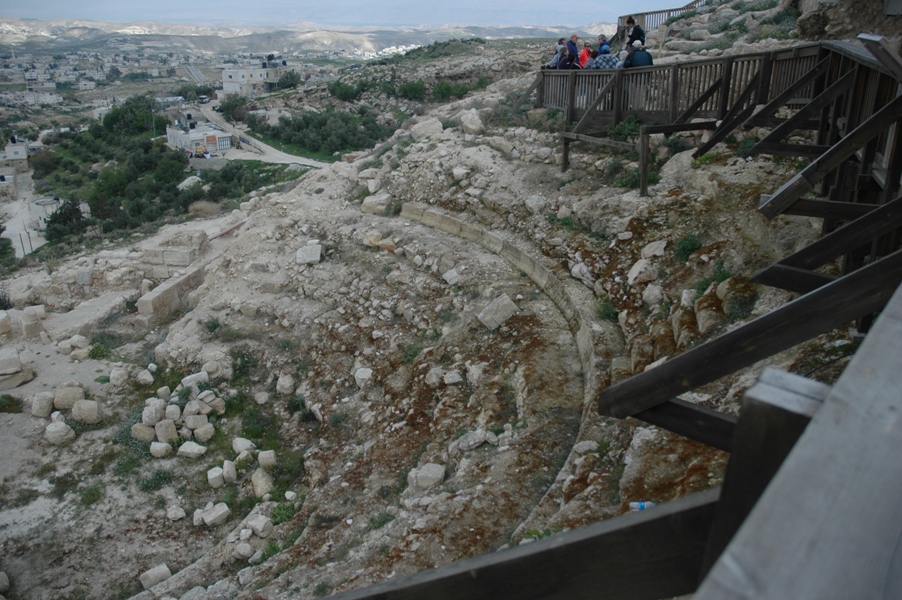
Herod’s private theater
Herod created his own private theater, built into the side of his mountaintop fortress. This also is still being excavated and restored. In the distance, a thin ribbon of the Dead Sea.
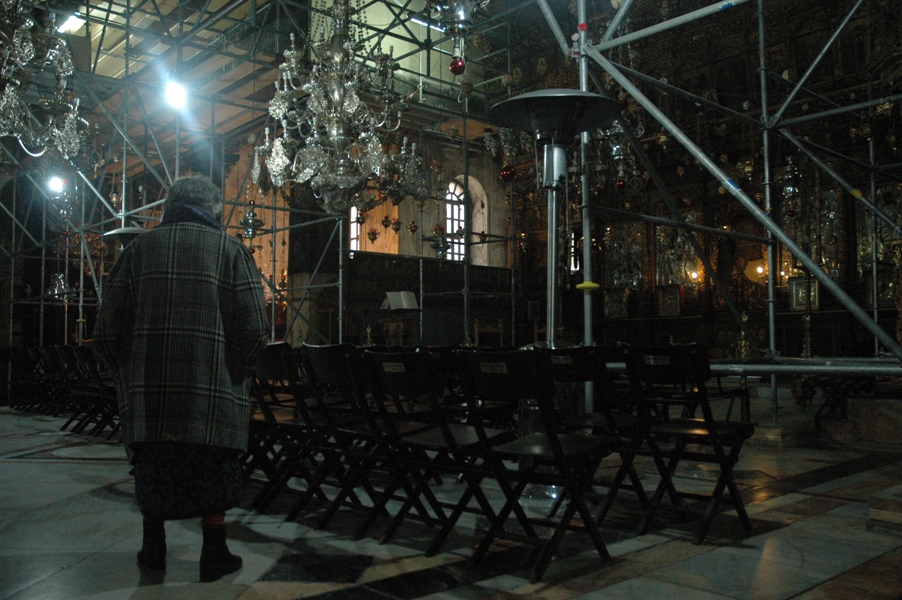
Church of the Nativity
Close by Herodium is Bethlehem, where repairs are being made to the Church of the Nativity.
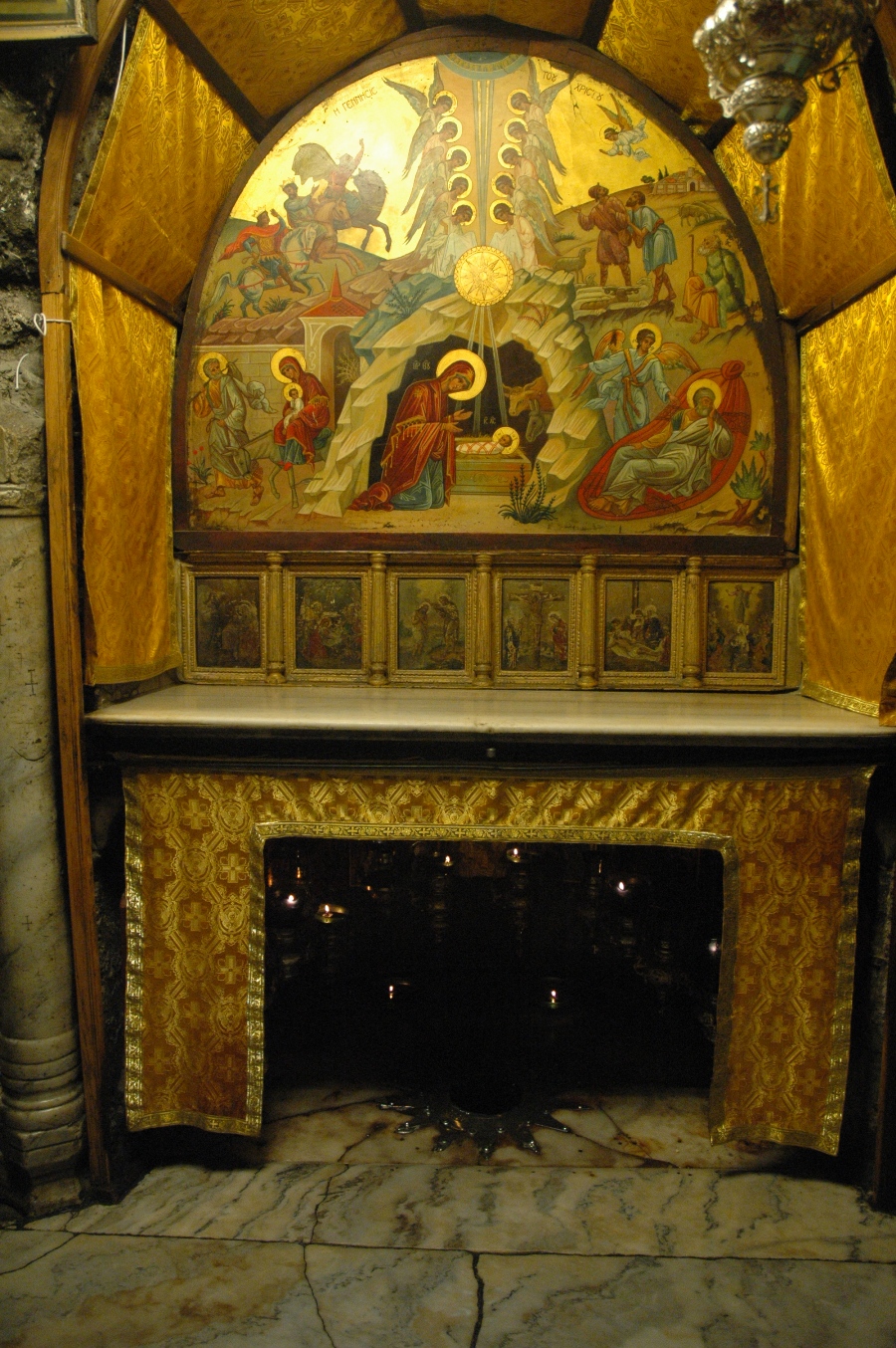
The Incarnation – Ground Zero
The inlaid star inside the Church marks the traditional location where Jesus was born.
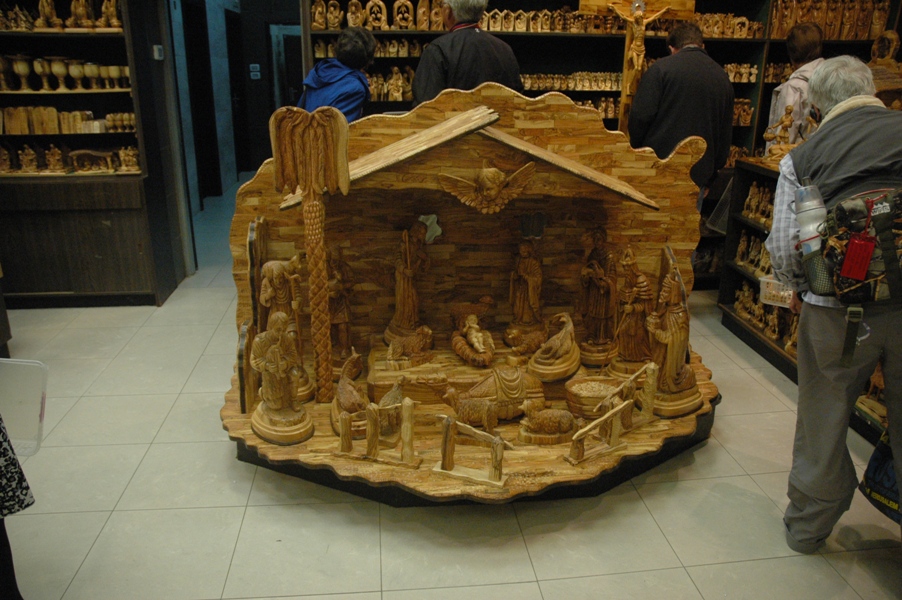
Olive wood creche
Our last stop of the day, the Nissan Brothers store, where olive wood items of all sizes are created and sold.
 RADIOSCRIBE
One comment